

Just used properly, Bai Jie Zi warms your channels to disperse phlegm, reduce obstruction, and relieve joint stiffness, offering targeted symptomatic relief when integrated into traditional herbal formulas under professional guidance.
Key Takeaways:
- Bai Jie Zi (White Mustard Seed) warms the Lung and transforms cold-phlegm, useful for cough with white, watery sputum and chest congestion.
- Bai Jie Zi unblocks and warms the channels to relieve cold-induced joint pain and stiffness, often used in formulas for wind-cold-damp bi.
- Use Bai Jie Zi cautiously in yin-deficient or heat presentations and during pregnancy; typical oral dose 3-9 g; external poultices can help drain pus and reduce swelling.
Botanical Identity and TCM Energetics
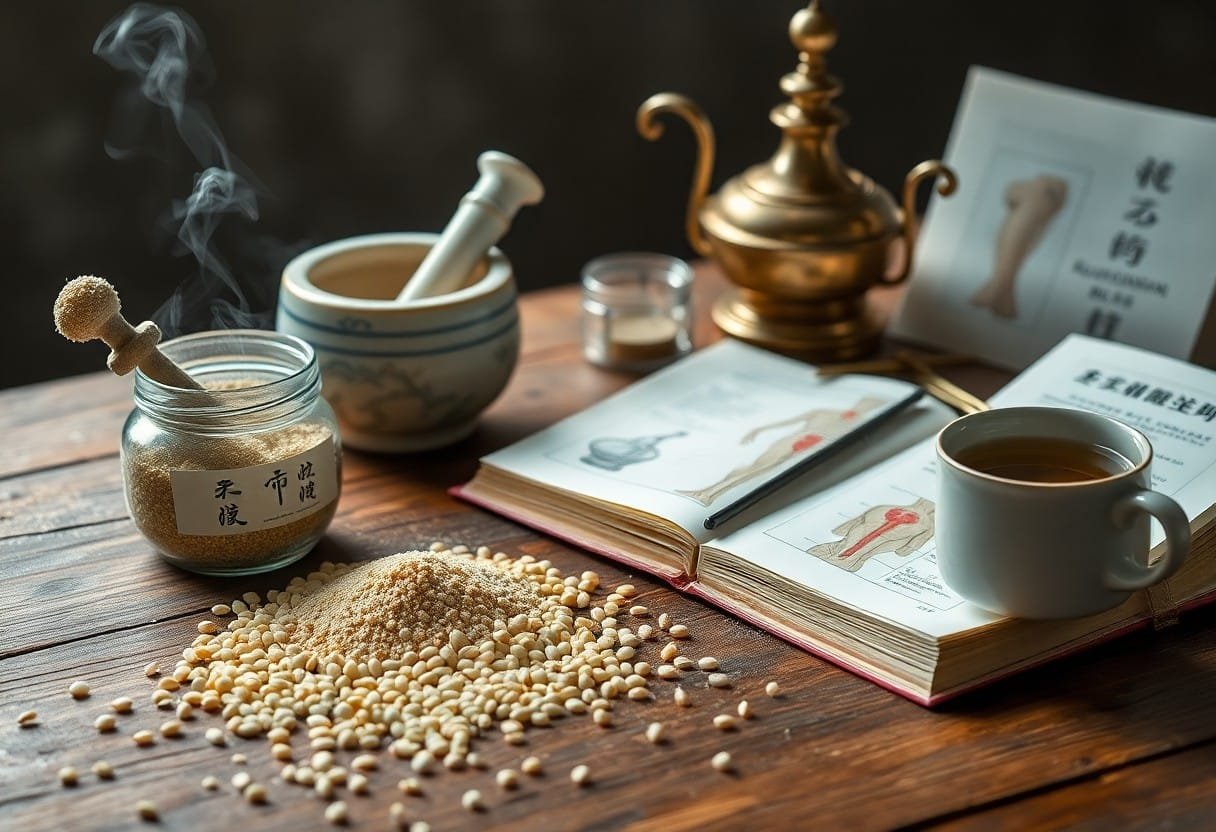
Sinapis alba, white mustard of the Brassicaceae, supplies the small, oil-rich seeds used as Bai Jie Zi in TCM; you will find product details at Bai Jie Zi (Mustard Seed) (白芥子) for reference and sourcing.
You should recognize the seed’s pungent, warming profile that mobilizes phlegm and disperses cold from channels and joints, making it useful when cold-phlegm obstructs movement and causes stiffness or pain.
Source and Processing of Sinapis Alba
Cultivation favors temperate regions where pods dry fully before harvest; you should select mature, intact seeds to ensure volatile oil content and therapeutic potency.
Processing commonly involves light dry-roasting to release vital oils and amplify warming action; you should avoid over-roasting, which can degrade volatiles and reduce efficacy.
Thermal Nature, Acrid Flavor, and Meridian Tropism
Heat in Bai Jie Zi is warming to hot in TCM terms, directing action toward the channels to disperse cold; you employ it to warm obstructed pathways and loosen cold-congealed phlegm.
Acrid flavor functions to move qi and disperse stagnation, so you will use the seed to transform phlegm, drive out nodules, and open constricted areas when combined appropriately with other herbs.
When you apply Bai Jie Zi pay attention to contraindications: avoid use in patterns of yin deficiency with internal heat, for dry coughs without sputum, and use caution in pregnancy and with sensitive mucosa.
Primary Actions on the Respiratory System
Bai Jie Zi warms the channels and helps you disperse cold-phlegm that obstructs the lungs and joints, reducing stiffness and facilitating movement without causing excessive drying.
Warming the Lungs to Transform Cold-Phlegm
Warmth from Bai Jie Zi enters the Lung channel, so you loosen thick, white phlegm and relieve chest tightness while restoring downward dispersal of lung qi.
Regulating Qi to Relieve Cough and Dyspnea
You will find its aromatic, penetrating action moves qi to relieve cough and shortness of breath by unblocking stagnant pathways and promoting expectoration.
Combine Bai Jie Zi with other warm, acrid herbs to enhance qi movement so you increase sputum clearance and ease labored breathing while preserving body fluids.
Penetrating the Channels and Collaterals
Bai Jie Zi heats the channels to disperse cold-phlegm lodged in the collaterals, allowing you to reestablish qi and blood flow to constricted areas.
When you apply it in targeted formulas, the seed’s pungent warmth penetrates sinews and vessels, promoting dissolution of sticky obstructions and improving mobility.
Dissolving Deep-Seated Phlegm Obstruction
Using Bai Jie Zi alongside expectorants and warming aromatics, you can soften and mobilize deep-seated phlegm so it can be transmitted out of the channels.
Alleviating Numbness and Joint Pain in Bi-Syndrome
Warming action of the seed reaches tendons and joints to relieve numbness, so you notice decreased stiffness and increased range of motion with continued use.
Combine the herb with those that open collaterals and tonify yang when you need sustained relief, and watch for excess heat or irritation as you adjust dosing.
Clinical Applications for External Pathologies
You apply Bai Jie Zi to external pathologies where cold-phlegm has entered channels and joints, using its warming, aromatic action to soften and mobilize stubborn phlegm deposits and relieve fixed pain.
Treating localized joint stiffness, you combine the seed with warm-plaster carriers or heating techniques so its volatile oils penetrate deeply, while monitoring for skin sensitivity and adjusting strength accordingly.
Resolving Yin-Type Nodules and Swellings
Local yin-type nodules respond when you use Bai Jie Zi in repeated warm applications, pairing it with damp-transforming herbs to soften cold, phlegm-filled swellings and promote gradual dispersal without harsh disruption.
The Role of Bai Jie Zi in Medicinal Plasters
Topical plasters employ crushed Bai Jie Zi to create penetrating warmth that drives aromatic constituents into periarticular tissues; you rely on this to loosen viscous deposits and restore subtle joint movement.
Applied with care, you test a small area first and often blend the seed with blood-moving or soothing herbs to balance irritation, adjusting concentration and duration based on the patient’s skin tolerance and response.
Classical Formulations and Herb Pairings
Classical formulas often combine Bai Jie Zi with phlegm-transforming and channel-warming herbs; you can consider modern extracts for consistent dosing, for example Bio Essence Health Science, Bai Jie Zi, White Mustard … when comparing preparations.
Synergistic Effects in San Zi Yang Qin Tang
San Zi Yang Qin Tang pairs Bai Jie Zi with zi su zi and lai fu zi to move phlegm and open the chest; you will notice improved qi descent and reduced focal stagnation when proportions are adjusted to the pattern.
Combinations for Warming the Interior and Expelling Cold
Combining Bai Jie Zi with gan jiang, rou gui, and wu zhu yu directs warmth into channels and joints to dispel cold-congealed phlegm; you can modify intensity based on pain severity and tongue diagnosis.
You should watch for mucosal irritation with strong mustard preparations and balance warming formulas with moistening or yin-nourishing herbs like mai men dong or sheng mai to protect fluids while expelling cold.
Safety Profiles and Usage Guidelines
Dosage recommendations vary by preparation: for internal use you typically see 3-9 grams in decoctions, while plasters or medicated oils use far smaller concentrations and shorter contact times under guidance.
Monitor for adverse reactions and systemic warming; if you develop excessive heat signs, nausea, palpitations, or persistent gastrointestinal upset, discontinue and consult a licensed practitioner.
Contraindications for Heat and Yin Deficiency
You should avoid Bai Jie Zi when clear signs of heat or yin deficiency are present, such as night sweats, dry throat, irritability, scanty urine, a red tongue, or a rapid thin pulse.
When you experience heat-pattern symptoms while using the herb, stop the herb and seek tailored treatment from a TCM practitioner who can substitute cooling herbs or adjust dosage.
Managing Skin Irritation and Topical Sensitivity
Topical applications can cause local blistering or dermatitis; you should perform a patch test for 24 hours and limit exposure on thin or damaged skin, especially near mucous membranes.
If you notice persistent redness, blistering, severe burning, or systemic signs like fever, remove the preparation immediately, cleanse the area, apply a cool dressing, and seek medical attention.
To wrap up
So you can use Bai Jie Zi when warming channels to move phlegm that obstructs joints and muscles; you should dose cautiously in heat or yin deficiency. Clinical reports and classic texts note rapid expectoration and joint relief when combined with dispersing herbs. Consult authenticated sources such as Bai Jie Zi – Chinese Single Herbs before prescribing and monitor for skin irritation and warming responses.