

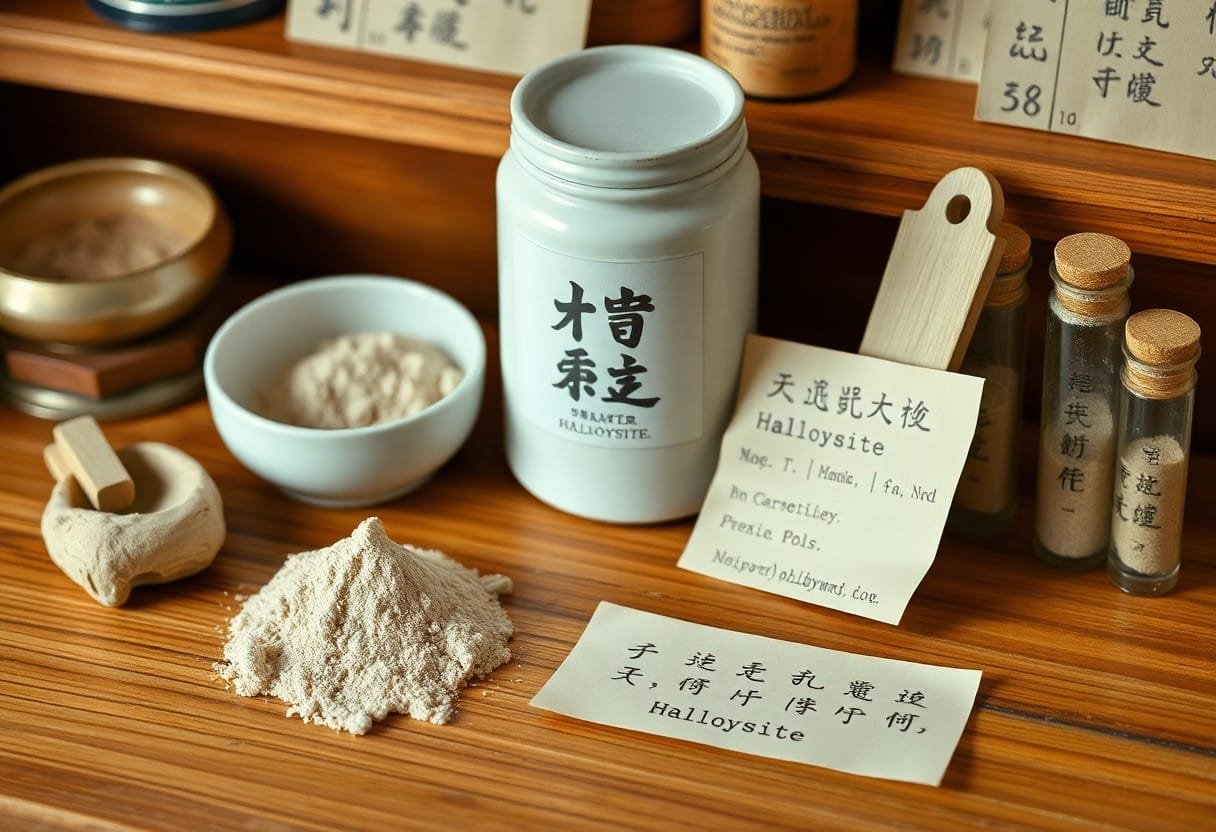
There’s a traditional astringent mineral, Bai Shi Zhi (Halloysite), used to calm chronic diarrhea and stop bleeding; you should consider sourcing authenticated supplies like Chi Shi Zhi – Red Halloysite – Max Nature for quality.
Key Takeaways:
- Bai Shi Zhi (halloysite) is a traditional astringent mineral used to arrest chronic diarrhea and intestinal bleeding by adsorbing fluids and contracting mucosal tissue.
- Typical use involves processed powder or pills combined with other herbs for chronic loose stools and bleeding; misuse or high doses can cause constipation, impair nutrient or drug absorption, or introduce contaminants from impure sources.
- Avoid use with acute abdominal fullness or suspected intestinal obstruction; seek a qualified practitioner for dosing and for pregnancy, breastfeeding, children, or prolonged treatment.
Pharmacological Properties and TCM Energetics
Pharmacology of Bai Shi Zhi demonstrates strong adsorptive and astringent actions that reduce intestinal secretions and promote local hemostasis; you will find it effective for chronic diarrhea and bleeding from weakened mucosa, where physical adsorption and protein coagulation help contain leakage while minimizing systemic effects.
Pinyin and Botanical Identification of Halloysitum
Pinyin for the mineral is Bai Shi Zhi (白石脂) and it is not botanical but mineralogical, identified as halloysite, a hydrated aluminum silicate clay; you should treat it as a mineral drug rather than a herb when sourcing and preparing formulations.
Thermal Nature, Flavor Profile, and Organ Meridian Tropism
Nature of Bai Shi Zhi is generally considered neutral with an astringent, mildly bland flavor, and you will use it to consolidate leakage; traditional sources direct its action primarily to the Spleen and Large Intestine meridians, aiding containment of diarrhea and external or internal bleeding.
Mechanism notes indicate you can expect physical adsorption, mucosal protein precipitation, and local astringent effects that reduce permeability and bleeding; you should avoid using it in cases of severe constipation or yang collapse and adjust dose for elderly or debilitated patients.
Therapeutic Actions in Gastrointestinal Disorders
Halloysite (Bai Shi Zhi) exerts firm astringent and hemostatic effects in the gut, so you can reduce mucosal secretions, firm stools, and control minor bleeding. Its fine, adsorptive particles bind irritants and promote local tissue contraction to help stabilize chronic gastrointestinal symptoms.
Astringing the Intestines to Resolve Chronic Diarrhea
When you apply Bai Shi Zhi for chronic diarrhea, its contracting action on the intestinal mucosa slows transit and consolidates stools, easing frequency and urgency. You should pair it with supportive herbs when deficiency or weakness is present to avoid excessive drying.
Managing Persistent Dysentery and Rectal Prolapse
Using Bai Shi Zhi in persistent dysentery helps arrest bleeding and reduce mucoid discharge, allowing you to lessen tenesmus and protect inflamed tissue while healing proceeds. Careful dosing supports hemostasis without masking ongoing infection.
Combine Bai Shi Zhi with gentle astringents and blood-staunching agents, and monitor clinical response so you can restore tissue tone and, when needed, move toward strengthening formulas to address underlying weakness.
Clinical Application in Hemorrhage Control
You use Bai Shi Zhi for its astringent action to control chronic bleeding and diarrhea; consult formulas and precautions at Bai Shi Zhi (Kaolinite) – TCM Herb Information when planning doses and pairings.
Consolidating the Chong and Ren Vessels for Uterine Bleeding
Treatments that consolidate the Chong and Ren pair Bai Shi Zhi with warming, astringent herbs so you reduce excessive uterine bleeding while supporting reproductive qi and blood stability.
Topical and Internal Use for Traumatic Bleeding and Sores
Topically, Bai Shi Zhi powder or plaster arrests surface bleeding and aids granulation; you apply it to cleaned wounds and combine with herbs that clear heat if signs of infection appear.
Internally, you administer low doses to restrain oozing from traumatic sores and bruises, combining with gentle blood-moving agents cautiously so you achieve hemostasis without obstructing necessary circulation.
Preparation and Processing (Pao Zhi)
Processing focuses on washing, drying, and size reduction to remove impurities and standardize particle size so you can control dosage and action.
Carefully controlled calcination transforms halloysite structure, increasing brittleness and modifying hemostatic strength; you monitor temperature and time to achieve consistent astringency.
Differences Between Raw and Calcined Bai Shi Zhi
Raw Bai Shi Zhi retains moisture and a colloidal character, producing milder astringent action and slower onset, so you may prefer it for delicate chronic diarrhea cases.
Calcined Bai Shi Zhi becomes drier and more friable, offering you stronger immediate astringent and hemostatic effects while reducing swelling capacity in the gut.
Impact of Calcination on Astringent Potency
Heat alters clay crystal structure and surface area, increasing particle exposure so you observe greater binding to mucosal proteins and faster stool firming when you use calcined Bai Shi Zhi.
Observe that over‑calcination can produce overly fine ash and introduce combustion byproducts, so you should validate processing parameters with standardized testing and sensory checks.
Material Composition and Mechanism of Action
Composition of Bai Shi Zhi is dominated by an aluminosilicate matrix with hollow, nanotubular structures and a high surface area; you encounter a mineral that is largely insoluble yet highly interactive with fluids and macromolecules.
Mechanism relies on strong adsorptive capacity and surface protein binding that reduces mucosal wetness and irritant contact; you will note diminished stool liquidity and less mucosal exposure when the material is applied topically or ingested as part of formulations.
Mineral Structure and Adsorptive Properties
Structure consists of layered sheets rolled into nanotubes, creating lumens and external surfaces that trap fluids and particulate matter; you can attribute much of the astringent effect to this geometric confinement.
Layers present alternating siloxane and aluminol faces with pH-dependent surface charge, enhancing cation exchange and selective adsorption of bile acids, bacterial products, and excess water; you observe clearer stools and reduced irritation when adsorption predominates.
Protective Effects on the Gastric and Intestinal Mucosa
Surface adherence forms a thin, mucoadhesive film over erosions and inflamed mucosa, limiting further insult and reducing pain; you may perceive symptomatic relief as direct contact with irritants is blocked.
Absorption of proteins and particulate blood components promotes local clot stabilization and reduces seepage without systemic coagulation effects; you often see slowed bleeding and a drier mucosal surface after application.
Clinical observations show that the combined barrier and adsorptive actions provide sustained protection in chronic diarrhea and minor mucosal bleeding, and you should expect gradual symptomatic improvement rather than immediate resolution.
Contraindications and Safety Guidelines
Pregnancy and breastfeeding are contraindications, so you should avoid Bai Shi Zhi due to potential effects on the fetus and infant and risks from mineral contaminants.
Children and patients with renal impairment must use halloysite only under clinical supervision because you may not clear accumulated silica or trace metals effectively.
Distinguishing Between Deficiency and Excess Heat Patterns
Assess pulse, tongue, and symptom pattern carefully so you can tell deficiency-related loose stools from excess-heat diarrhea that would be aggravated by strong astringents.
Observe stool color, odor, and systemic signs so you can choose Bai Shi Zhi when pale, watery diarrhea indicates deficiency but avoid it when heat signs, fever, or constipation predominate.
Precautions Regarding Long-term Mineral Supplementation
Limit dose and duration when you prescribe halloysite because prolonged use can cause mineral imbalance, gut binding of nutrients, or accumulation of impurities.
Consult a licensed practitioner and request purity testing so you can confirm low heavy-metal content and appropriateness before prolonged administration.
Monitor renal function, serum minerals, and bowel patterns regularly so you can detect adverse effects early and adjust or discontinue supplementation as needed.

Final Words
Considering all points you should view Bai Shi Zhi (halloysite) as an astringent mineral that can help control chronic diarrhea and reduce bleeding by contracting tissues and adsorbing fluids; you must balance use with proper diagnosis and dosing. Consult your licensed TCM practitioner before use and refer to Chinese Herb: Chi Shi Zhi (Halloysite, Kaolin) … for detailed profiles.