

With a long history in traditional Chinese medicine, Bai Qian (Cynanchum root) directs lung qi downward to relieve cough with profuse phlegm, so you can use it to thin sputum and ease expectoration when prescribed by a qualified practitioner.

Key Takeaways:
- Bai Qian (Cynanchum root) redirects Lung qi downward and transforms phlegm, stopping cough and relieving wheeze especially when sputum is copious and thin.
- Herbal profile: acrid, slightly sweet, neutral; enters the Lung channel; common dose 3-9 g (decoction) and often combined with other expectorant or qi-descending herbs in formulas for productive cough.
- Use caution with dry coughs, yin-deficient coughs, pregnancy, or generally weak constitutions; avoid when no phlegm is present.
Botanical Profile and Identification
Leaves of Bai Qian are opposite and lanceolate, and you can spot milky sap when stems are cut; plants climb with slender, twining stems and paired follicles that release silky seeds.
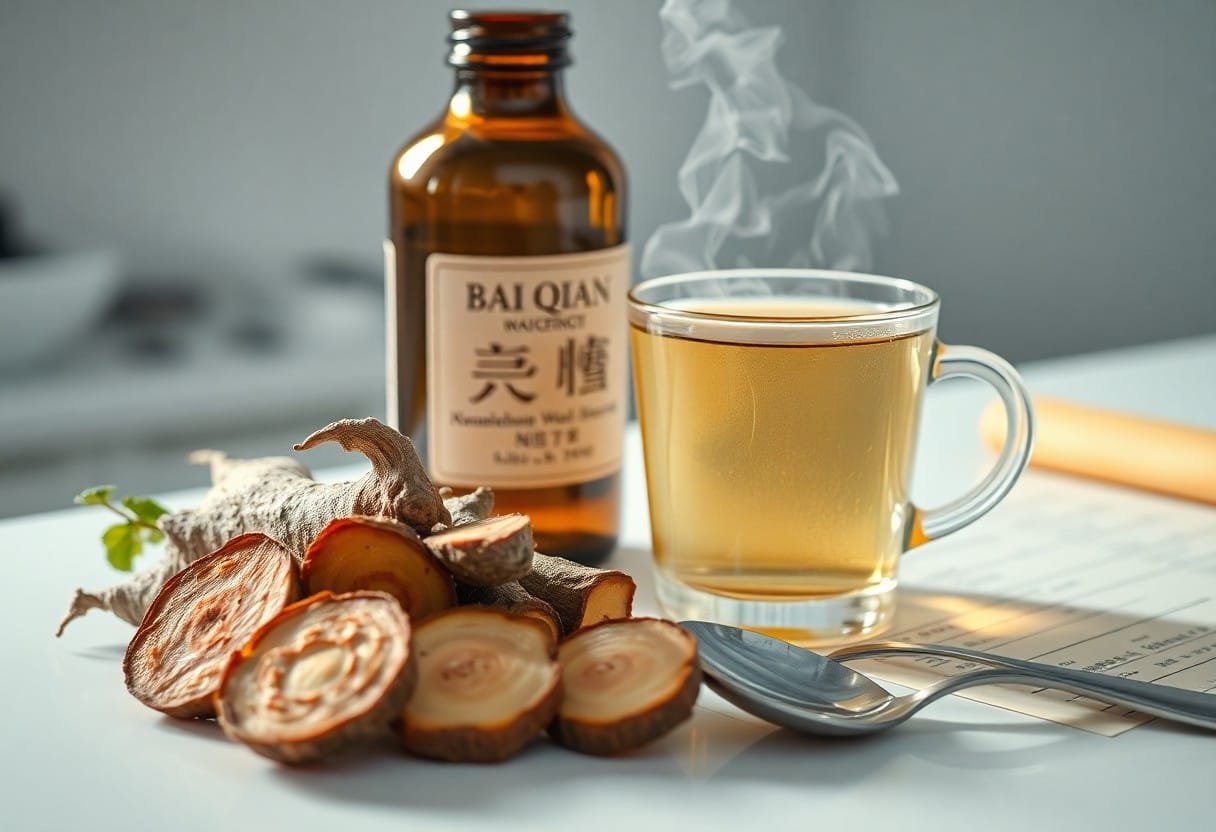
Roots are long, cylindrical and pale when dried, and you can purchase cultivated samples such as Plum Dragon Bai Qian Chinese Herb for reference in your materia medica.
Distinguishing Cynanchum stauntonii and C. glaucescens
Flowers of C. stauntonii tend to be smaller and more tubular with finer pubescence, while C. glaucescens shows broader corollas and glaucous coloring, so you should inspect floral shape carefully.
Texture of leaves provides clear cues: C. glaucescens often has thicker, bluish-gray leaves and sturdier stems; when you compare specimens you should look for leaf surface and follicle size as reliable markers.
Traditional Harvesting and Processing Methods
Harvest roots in autumn after aerial parts die back, when you can obtain maximum starches and medicinal constituents from mature taproots.
Cleaning involves trimming fibrous outer tissue and slicing thinly before sun-drying or low-heat oven-drying so you preserve active components and reduce mold risk.
Storage in dry, ventilated containers with occasional gentle roasting is traditional; you should label batches with harvest date to monitor potency over time.
Core TCM Properties and Energetics
Bai Qian is slightly warm, acrid, and bitter, primarily entering the Lung channel; you use it to direct rebellious Lung qi downward and to resolve copious, turbid phlegm that resists expectoration.
Practitioners often combine it with moistening or warming herbs according to phlegm quality, keeping doses moderate so you reduce cough without over-dispersing protective qi.
Nature, Flavor, and Meridian Tropism
You note its acrid flavor moves qi while the bitter aspect helps clear congested mucus; the slight warmth disperses cold-phlegm and focuses action on the Lung channel.
The Mechanism of Descending Lung Qi
The herb directs Lung qi downward by unblocking the descending pathway, loosening mucus and promoting expectoration so you regain smoother airway flow.
Descending action complements its phlegm-transforming properties, allowing you to pair Bai Qian with moistening or dispersing partners to restore normal respiratory dynamics.
Consider contraindications: avoid use when dry, yin-deficient cough predominates or use caution in pregnancy and in patients with a weak Spleen, adjusting formulas to your patient’s pattern.
Therapeutic Actions and Clinical Indications
Bai Qian descends rebellious Lung qi, transforms and expels copious phlegm so you gain relief from chest congestion and easier expectoration; clinicians use it for patterns of phlegm obstructing the lungs with pronounced sputum and wheeze.
Resolving Profuse Phlegm and Stagnation
When phlegm is abundant and turbid, Bai Qian promotes downward movement and assists expectoration so you can clear mucus more effectively; it softens stagnation and complements expectorant formulas to mobilize trapped sputum.
Managing Cough and Respiratory Wheezing
Often indicated for cough with wheeze, Bai Qian calms dyspnea and reduces coughing fits so you experience less respiratory distress; combine with warming or cooling herbs according to phlegm-heat or phlegm-cold presentations.
Pairing Bai Qian with herbs like Gua Lou or Xing Ren enhances phlegm resolution and bronchodilation, and you should tailor dose and duration to the underlying pattern while monitoring for dryness or yin deficiency.
Bai Qian (Cynanchum Root) – Descending Herb for Cough with Profuse Phlegm
Pairing Bai Qian with warm, aromatic herbs helps you mobilize and expel cold-phlegm while preserving its descending action.
Clinically you find it in formulas addressing cough with copious, thin sputum, often alongside Qian Hu, Jie Geng, and Xing Ren to harmonize coughing and expectoration.
Synergistic Combinations for Phlegm-Cold Patterns
You often combine Bai Qian with Qian Hu to guide phlegm downward and with Gan Jiang or Xi Xin when cold predominates, tailoring the mix to the patient’s temperature signs.
Combine it with Jie Geng to open the lungs and with Ban Xia when you face stubborn, turbid phlegm, increasing expectorant effect while moderating irritation.
Integration into Modern Respiratory Formulas
Modern formulators include Bai Qian in cough syrups and capsules to enhance expectoration while minimizing sedative components, allowing you to address phlegm without unduly suppressing the cough reflex.
Formulators standardize doses and pair Bai Qian with mucolytic or bronchodilatory herbs so you can maintain safety; you should monitor interactions with antitussives and follow evidence-based dosing.
Comparative Analysis with Similar Herbs
Quick Comparison
| Aspect | Comparison |
| Taste / Property | You find Bai Qian bitter and slightly sweet, focused on descending Lung qi; Qian Hu is acrid-bitter and favors exterior-dispersing with downward direction. |
| Primary Indication | You choose Bai Qian for cough with profuse, thin phlegm and wheeze; you use Qian Hu when wind-heat or exterior stagnation accompanies cough. |
| Clinical Role | You integrate Bai Qian to loosen sputum and relieve dyspnea directly; you employ Qian Hu to assist release of pathogens and guide other herbs outward. |
| Cautions | You avoid Bai Qian in cough from Lung and Kidney deficiency; you use Qian Hu cautiously in deficiency or pregnancy. |
Differentiating Bai Qian from Qian Hu
Bai Qian directs Lung qi downward and transforms copious phlegm, so you favor it when expectoration is difficult and wheeze predominates; Qian Hu more often disperses exterior pathogens and guides formula actions outward, which you select with fever or wind-heat signs.
Unique Advantages in Descending Excess Qi
You rely on Bai Qian when the treatment goal is a focused downward action that clears obstruction without aggressively dispersing the exterior, making it suitable for excess phlegm lodged in the Lung channels.
Its targeted expectorant and anti-spasmodic tendencies let you reduce wheeze and mobilize thick sputum while preserving Lung qi balance, so you pair it with warming or transforming herbs based on pattern differentiation.
Dosage, Administration, and Safety
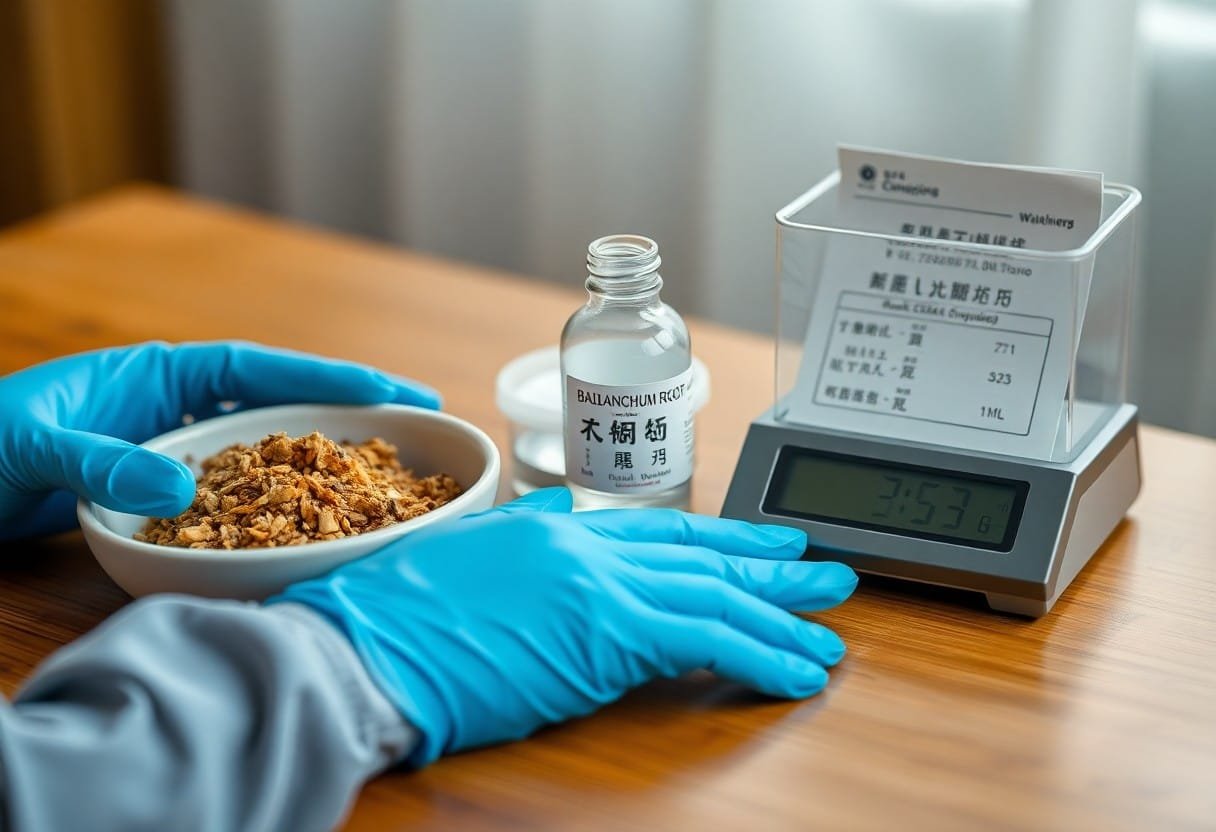
Bai Qian is generally used in 3-9 g doses for cough with profuse, turbid phlegm, and you should follow a qualified practitioner’s guidance for frequency and overall treatment length.
Standard Dosage and Decoction Guidelines
Typical decoction guidelines call for 3-9 g of sliced or lightly crushed root simmered with the formula for about 20-30 minutes, and you may adjust dose by age, weight, and concurrent herbs.
Essential Contraindications and Cautions
Avoid using Bai Qian when your cough is dry with scant sputum, or when you display yin deficiency, internal heat, or fluid depletion that could be aggravated by expectorant action.
Consult a qualified practitioner before using Bai Qian during pregnancy, lactation, with children, the elderly, or when you take anticoagulants, cardiac drugs, or if you experience persistent gastrointestinal upset, dizziness, or allergic signs.
Conclusion
Taking this into account, you can use Bai Qian (Cynanchum root) as a descending herb to relieve cough with profuse phlegm when diagnosis indicates phlegm-heat or phlegm-cold patterns; careful dosing and combination with other herbs optimize effect. Refer to clinical resources and safety summaries like Cynanchum (bai qian) for indications.
You should monitor response and seek professional guidance for contraindications, pregnancy, or concurrent medications.