

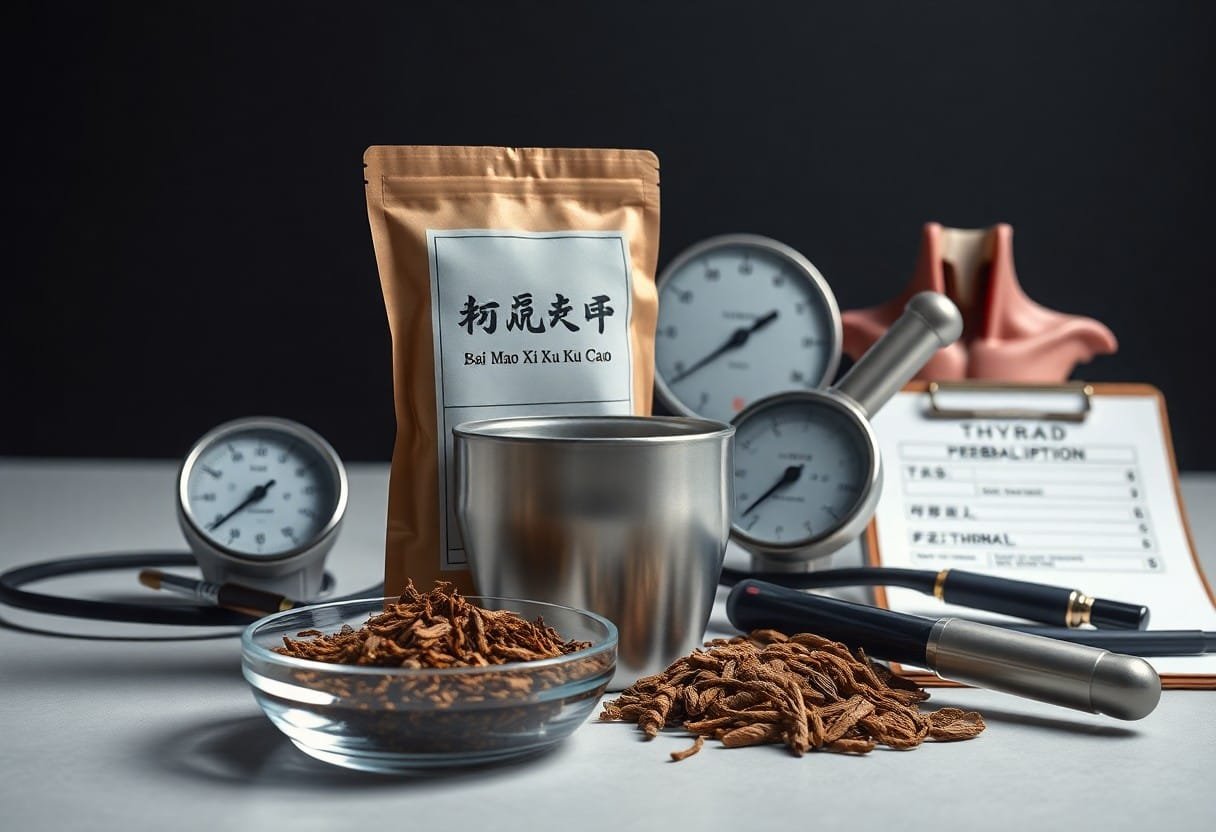
There’s evidence that Bai Mao Xia Ku Cao (Woolly Prunella) clears heat, reduces nodules, and can assist you in managing hypertension; see Xia Ku Cao – Selfheal Spike, Prunella for pharmacology, actions, and traditional dosing.
Key Takeaways:
- Bai Mao Xia Ku Cao (Woolly Prunella) is a cold, bitter herb that clears liver heat and dissipates nodules such as goiter, scrofula, and swollen lymph nodes.
- Modern studies report anti-inflammatory, antiviral, antioxidant, and mild antihypertensive effects that support its traditional use for nodular conditions and elevated blood pressure.
- Typical preparations include decoctions and topical washes; consult a qualified TCM practitioner before use because it may aggravate cold-spleen patterns or interact with medications.

Botanical Profile and TCM Classification
Prunella (Bai Mao Xia Ku Cao) is a mat-forming perennial with woolly stems and purple flower spikes, and you will find it across East Asia in grasslands and disturbed soils. In TCM it is classified as a cool, heat-clearing herb used to resolve nodules and address liver-fire patterns linked to hypertension.
Botanical and TCM overview
| Botanical name | Ajuga decumbens (Woolly Prunella) |
| Family | Lamiaceae |
| Habit | Mat-forming perennial with woolly stems and terminal flower spikes |
| Distribution | East Asia; disturbed soils, fields, roadsides |
| TCM classification | Cool; clears heat, resolves toxicity, reduces masses |
| Primary actions | Clears heat, reduces nodules, calms upward-fire linked to hypertension |
Characteristics of Ajuga decumbens (Woolly Prunella)
Leaves and stems are covered with fine hairs, and you can identify the plant by decumbent stems, opposite ovate leaves, and dense terminal clusters of tubular purple flowers that form conspicuous spikes. Stems root at nodes, so you will often see spreading mats in open, sunny sites.
Taste, Temperature, and Meridian Tropism
Taste is bitter and mildly acrid, and you will perceive a cooling temperature; the herb primarily enters the Liver and Lung meridians, which directs its use toward clearing liver-fire, reducing swellings, and addressing nodular disorders that affect hypertensive presentations.
Taste, Temperature & Meridian Tropism
| Taste | Bitter, slightly acrid |
| Temperature | Cold / cooling |
| Meridian tropism | Liver, Lung |
| Typical indications | Nodules, goiter-like swellings, hypertension with heat signs |
| Common preparation | Decoction 6-15 g; used in formulas to clear heat and soften hardness |
Clinical use focuses on heat-clearing and softening hardness, so you often combine Bai Mao Xia Ku Cao with phlegm-transforming and qi-moving herbs when treating nodules, or with cooling and calming herbs in formulas that address hypertensive heat patterns.
Therapeutic Actions for Nodules and Phlegm-Heat
Bai Mao Xia Ku Cao vents phlegm-heat and softens hardened masses, making it useful for nodular swellings. You can expect reduced local inflammation and improved mobility of lumps when it is used alongside dispersing herbs.
Combine it with qi-moving and blood-invigorating herbs so you address both mass softening and stagnation; you should avoid heavy use if your digestion is weak and monitor blood pressure as therapy progresses.
Dissipating Goiters, Scrofula, and Lymphatic Swelling
You will find the herb effective at reducing size and tenderness of goiters, scrofulous swellings, and enlarged lymph nodes by breaking up phlegm-clumps and promoting softening and resolution of nodules when used in proper formulas.
Clearing Internal Fire and Resolving Stagnation
Use the bitter-cooling quality to clear internal heat that drives stagnation and contributes to elevated blood pressure; you can calm irritability and reduce pathological heat signs while improving circulatory stasis.
Dosage and combination matter: begin with moderate amounts, tailor the formula to your digestive strength, and pair with supportive herbs so you clear internal fire without inducing cold deficiency while managing hypertensive patterns.
Clinical Applications in Hypertension Management
Clinically, you can consider woolly Prunella as an adjunct to antihypertensive regimens in patients with mild to moderate hypertension who also show inflammatory nodules, since its anti-inflammatory and mild vasodilatory actions may lower peripheral resistance and local swelling.
When you integrate it into care, monitor blood pressure, electrolytes, and renal function closely; avoid using it as monotherapy and be alert for herb-drug interactions that could alter plasma levels of prescribed antihypertensives.
Mechanisms of Blood Pressure Regulation
Research indicates Prunella extracts modulate nitric oxide signaling and calcium channel activity, producing vasodilation and reduced vascular tone that can translate into lower systemic pressure.
Inflammation modulation by the herb’s flavonoids and triterpenes can decrease endothelial dysfunction and vascular remodeling, so you may see improved arterial compliance over time alongside blood pressure effects.
Modern Pharmacological Research on Cardiovascular Health
Animal models demonstrate antihypertensive effects driven by vasodilation, antioxidant properties, and partial inhibition of renin-angiotensin pathways, suggesting modest blood pressure reductions under controlled conditions.
Clinical evidence remains limited and heterogeneous, so you should weigh preliminary positive signals against the need for randomized trials before recommending routine use for cardiovascular indications.
Ongoing pharmacokinetic and interaction studies are clarifying active constituents, metabolism, and potential interactions with ACE inhibitors or calcium channel blockers, which helps you assess safety, dosing, and suitability in combined treatment plans.
Anti-inflammatory and Antimicrobial Properties
Prunella contains anti-inflammatory flavonoids and phenolic acids that blunt cytokine responses and exhibit antibacterial effects, so you can apply it to reduce nodule inflammation and help control superficial infections.
Treatment of Respiratory Infections and Sore Throat
You can use Prunella as a warm infusion or gargle to soothe sore throat, reduce mucosal swelling, and benefit from its antimicrobial constituents against common pharyngitis pathogens while continuing conventional care for severe symptoms.
Topical Use for Skin Inflammation and Carbuncles
Applying crushed leaves or a prepared poultice to inflamed skin and carbuncles may decrease swelling, lower local bacterial load, and promote superficial healing, provided you monitor for worsening or systemic signs.
Carefully prepare a sterile decoction or tincture for lesion cleansing, apply with a clean dressing, and seek professional drainage and antibiotics if you experience fever, spreading erythema, or deep abscess formation.
Preparation and Traditional Administration
You prepare Xia Ku Cao as a decoction: rinse 6-12 g dried (15-30 g fresh), soak briefly, then simmer 15-30 minutes and strain; drink warm. See Xia Ku Cao (Heal-all spikes) – TCM Herb for herb specifics and sourcing.
Decoctions are traditionally taken 2-3 times daily for heat-clearing and nodule softening; you may also apply cooled extract topically as a compress for palpable nodules. Adjust duration and frequency to constitution and clinical response.
Standard Dosage and Decoction Guidelines
Dosage guidelines commonly recommend 6-12 g dried or 15-30 g fresh per day, decocted 15-30 minutes; you should reduce dose for the elderly and children. Monitor response and modify under practitioner guidance.
Adults often take the decoction twice daily, increasing to three times for acute heat signs; you should avoid long-term high doses in weak or depleted patients and consult a licensed TCM clinician if you are pregnant or on concurrent medications.
Synergistic Herbal Combinations
Combine Xia Ku Cao with herbs that clear Liver heat and address phlegm-stasis: consider Ju Hua and Jue Ming Zi for eye and heat symptoms, and Tian Ma with Gou Teng when hypertension and Liver wind are present; you should tailor pairings to pattern differentiation.
Pair complementary herbs with attention to cook times-roots and seeds simmer longer while flowers are added near the end-and you must monitor blood pressure when using hypotensive combinations or concurrent pharmaceuticals.
When composing formulas for nodules, you can add phlegm-resolving herbs such as Ban Xia, Zhe Bei Mu, or seaweeds to soften masses; you should always start at lower doses and reassess within one to two weeks under professional supervision.
Safety Profile and Contraindications
Herb is cooling and used to resolve nodules; you should avoid unsupervised long-term use if pregnant, breastfeeding, or known to have bleeding disorders or plant allergies.
Clinical practice advises informing your practitioner about all medications and supplements, since coadministration with anticoagulants, antihypertensives, or immunosuppressants may require close supervision.
Precautions for Spleen and Stomach Deficiency
If you present with spleen or stomach deficiency characterized by loose stools, poor appetite, or fatigue, use the herb sparingly and combine it with warming, digestive-supportive herbs under guidance.
Identifying Potential Side Effects and Interactions
Those with sensitive digestion may experience bloating, loose stools, or mild abdominal discomfort after taking the herb; you should discontinue use if symptoms intensify.
Monitor for allergic reactions such as rash, itching, or respiratory difficulty, and watch for unexpected shifts in blood pressure or bleeding tendency when you are on related prescription medications.
Consult a licensed practitioner promptly for severe reactions, ongoing gastrointestinal upset, or before combining the herb with prescription drugs, as lab monitoring or dosage adjustments may be necessary.
Conclusion
Summing up, you can consider Bai Mao Xia Ku Cao (Woolly Prunella) a traditional heat-clearing herb for resolving nodules and supporting blood-pressure control; phytochemicals indicate anti-inflammatory and vasorelaxant effects, but clinical evidence remains limited, so you should consult a qualified practitioner before using it with antihypertensive medications and monitor your blood pressure closely.