

Just note that Bai Jiao Xiang warms the middle, disperses cold-damp, and improves digestion; you can review clinical uses and formulas at Traditional Chinese Medicine Herbs for Digestive Health.
Key Takeaways:
- Actions: Warms the middle, disperses cold-damp, transforms stagnation, promotes Qi movement, and relieves abdominal pain, bloating, nausea, and vomiting.
- Indications: Cold-damp digestive disorders manifesting as epigastric/abdominal cold pain, poor appetite, borborygmus, loose stools, or vomiting from cold obstruction.
- Precautions: Avoid or use sparingly in patterns of yin deficiency with heat; exercise caution in pregnancy and with mucosal irritation or excessive warmth from other herbs.
Botanical Profile and TCM Energetics
Piper nigrum is a climbing vine in the Piperaceae family; its ripe drupes yield the white pepper you encounter after the pericarp is removed. You can identify quality by uniform pale seeds, strong aromatic oils, and minimal husk fragments, all of which reflect proper maturation and handling.
White pepper’s TCM profile is pungent and warming, used to disperse cold-damp and revive the middle jiao. You will reach for it when cold-related bloating, poor appetite, or loose stools predominate, as it primarily enters the Spleen and Stomach meridians to restore digestive function.
Sourcing and Processing of Piper nigrum
Harvest typically occurs in tropical regions such as India, Vietnam, and Indonesia when berries turn fully ripe; you should prefer traceable farms with consistent harvest timing for predictable chemistry. Post-harvest handling strongly affects aroma and therapeutic potency.
Processing for white pepper involves soaking or retting to remove the outer pericarp, followed by thorough drying and light parching to concentrate volatile oils. You can assess processing quality by aroma clarity, absence of fermentation off-notes, and even coloration of the seed.
Thermal Nature, Flavor, and Meridian Tropism
Aromatic and pungent, Bai Jiao Xiang manifests a warm thermal nature that disperses interior cold and resolves dampness; you will find it effective for warming the middle and promoting digestion through its volatile constituents. Clinical use favors targeting the Spleen and Stomach meridians.
You should dose conservatively because the warming action can aggravate preexisting heat signs; the pungent flavor mobilizes Qi and transforms turbid damp, while the aromatic quality helps revive appetite and clear stagnation without heavy tonification.
Therapeutic Actions on the Middle Jiao
Bai Jiao Xiang directs warming, aromatic action to the middle jiao, helping you restore digestive qi and relieve cold stagnation in the spleen and stomach. Its penetrating warmth transforms dampness and reduces abdominal fullness so you regain appetite and regular bowel function.
Warming the Spleen and Stomach
You will find Bai Jiao Xiang excites yang within the middle jiao, supporting digestion and easing cold-induced epigastric pain, nausea, and poor appetite. Controlled use in formulas reinforces spleen function while preserving vital fluids.
Dispersing Pathogenic Cold and Dampness
Warmth from Bai Jiao Xiang penetrates congealed cold and mobilizes damp turbidity, so you experience less bloating, watery stools, and a sense of heaviness. Combined with other aromatic herbs, it restores flow and clears obstructive cold-damp.
Clinical experience indicates you should employ Bai Jiao Xiang when cold signs predominate-cold pain relieved by warmth, clear discharges, and slow digestion-while avoiding it in heat or yin-deficient patterns that could be aggravated by its drying, warming nature.
Clinical Indications for Digestive Pathologies
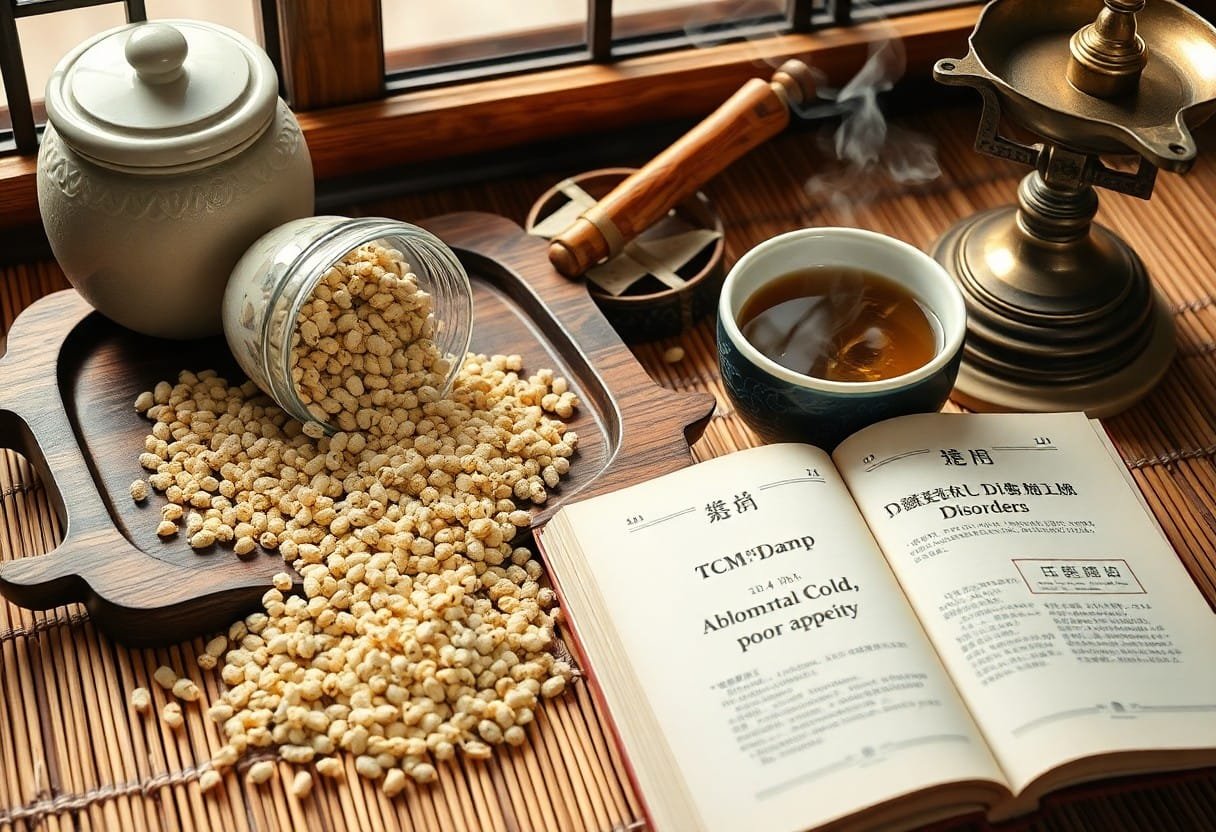
You should apply Bai Jiao Xiang for cold-damp obstruction of the middle jiao when poor appetite, bloating, nausea and loose stools predominate; consult formulations such as Huo Xiang Zheng Qi San: A Simple Guide to a Dampness- … for practical pairing and dosing guidance.
Alleviating Cold-Induced Epigastric Pain
When epigastric pain is sharp, worse with cold and eased by warmth, you may use Bai Jiao Xiang to warm the middle, move stagnant qi, and reduce focal distension while combining it with harmonizing digestive herbs.
Managing Diarrhea and Vomiting from Stagnation
Acute diarrhea and vomiting driven by cold-damp stagnation often respond when you deploy warming aromatics to transform dampness, consolidate the center, and arrest leakage, especially with watery stools and abdominal chill.
Chronic or recurrent cases benefit when you pair Bai Jiao Xiang with spleen-supporting or regulatory herbs; you should tailor the formula according to tongue, pulse, and any emerging heat signs to avoid imbalance.
Modern Pharmacological Insights
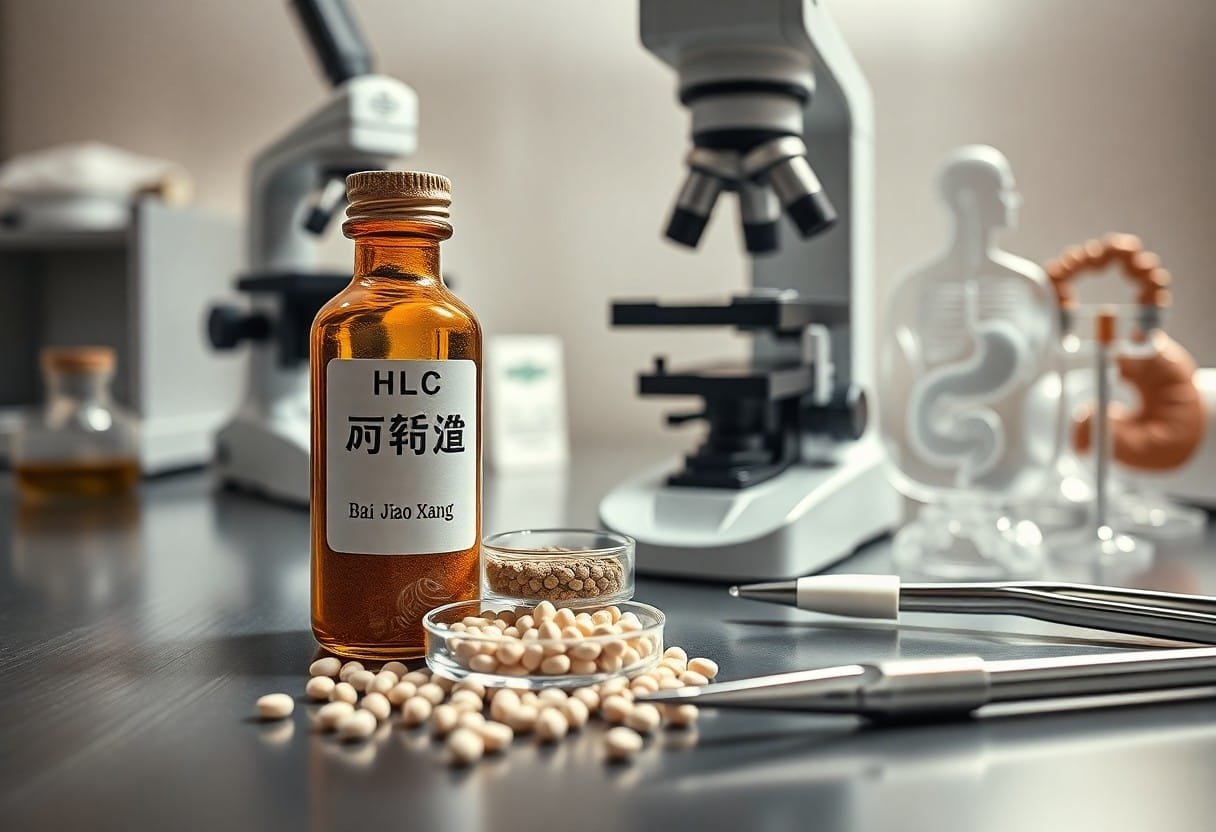
Research into Bai Jiao Xiang reveals piperine, volatile oils, and terpenes that produce warming, carminative effects; you can expect anti-inflammatory and antimicrobial activity that supports its traditional use for cold-damp digestive disorders.
Clinical and preclinical data show improvements in dyspepsia, reduced bloating, and modest increases in gastric motility; you should consider potential interactions with drugs metabolized by CYP enzymes and monitor for mucosal irritation in sensitive patients.
The Role of Piperine in Nutrient Absorption
Piperine enhances bioavailability by inhibiting intestinal CYP3A4 and P‑glycoprotein, so you may absorb higher levels of coadministered phytochemicals and fat‑soluble vitamins when using Bai Jiao Xiang.
Studies in humans and animals confirm increased plasma concentrations of compounds paired with piperine, which means you should adjust dosing and be cautious with medications that have narrow therapeutic windows.
Impact on Gastric Secretion and Motility
Gastric secretion and motility are stimulated by constituents of Bai Jiao Xiang via vagal pathways and local receptor activation, so you may experience faster gastric emptying and reduced postprandial fullness but also a higher risk of reflux symptoms.
Experimental models link increased gastrin release and enhanced smooth muscle contractility to piperine and volatile oils, indicating you might gain stronger digestive tone while watching for transient gastric discomfort at higher doses.
Preparation and Traditional Administration
Traditional preparation often uses light dry-frying to release Bai Jiao Xiang’s aromatic warmth; you then slice or grind it and add sparingly to formulas aimed at cold-damp digestive patterns. Consult resources on Damp-cold syndrome for compatible pairings and contraindications.
Internal Usage in Powders and Decoctions
For internal use you blend small amounts into powders or add Bai Jiao Xiang near the end of a decoction to preserve volatile oils; you rely on it to warm the middle, disperse cold, and support digestion alongside harmonizing herbs.
External Application for Localized Warmth
Topical applications employ poultices or infused oils applied to the abdomen to deliver localized warmth and relieve focal cold; you must avoid broken skin, test a small area first, and watch for excessive heat or irritation.
Mix ground Bai Jiao Xiang with a carrier such as sesame oil or mashed ginger to form a poultice; you apply over the navel or lower abdomen and cover for 15-30 minutes, removing at the first sign of burning and adjusting frequency based on response.
Safety, Contraindications, and Cautions
Pregnancy and breastfeeding are times when you should avoid internal use of Bai Jiao Xiang or limit it to minimal, clinician-guided doses because warming, aromatic herbs can influence uterine activity and milk supply.
Individuals with bleeding tendencies, uncontrolled hypertension, or sensitive respiratory mucosa should use Bai Jiao Xiang cautiously and cease use if you experience mucosal irritation, palpitations, or insomnia.
Distinguishing Heat and Yin Deficiency Patterns
Heat-dominant presentations with high fever, thirst, red tongue, and a rapid pulse indicate you should avoid or limit warming aromatics like Bai Jiao Xiang until heat is cleared.
Yin-deficient patterns characterized by night sweats, dry mouth, a thin rapid pulse, and low-grade tidal heat suggest you should prioritize cooling, yin-nourishing herbs rather than prolonged warming therapy.
Recommended Dosage and Duration of Use
Typical clinical doses are 1-3 grams in decoctions or 3-9 grams when included in compound formulas, and you should choose lower amounts for elderly or frail patients.
Short-term courses of one to two weeks are common; you should reassess symptom response frequently and avoid continuous long-term use without practitioner oversight.
Monitor for overstimulation, digestive upset, or sleep disturbance and consult a licensed practitioner to adjust dose or discontinue if adverse effects persist.
Summing up
On the whole you can use Bai Jiao Xiang (white pepper fragrance) as a warming aromatic for cold-damp digestive disorders, because it warms the spleen and stomach, disperses cold, transforms damp, and moves qi to relieve abdominal pain, bloating, nausea and poor appetite. Avoid use in yin-deficient heat, febrile or bleeding conditions and during pregnancy; dose sparingly and pair with harmonizing herbs for safety.