

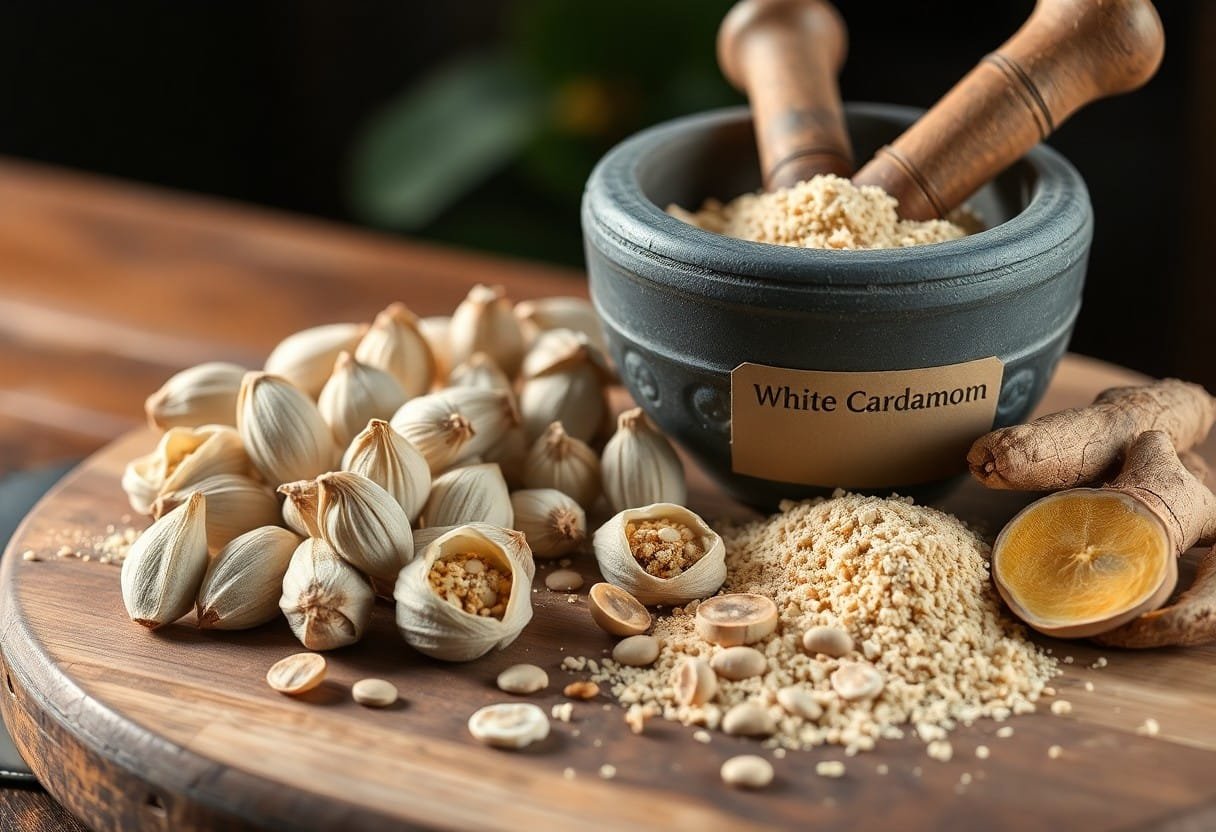
Aromatic Bai Dou Kou helps resolve dampness in the Middle Jiao; you use it to warm the spleen, regulate qi, and improve digestion with a pungent, camphor-like fragrance.
Key Takeaways:
- Bai Dou Kou (White Cardamom): aromatic, pungent, warm herb that enters the Spleen and Stomach channels to transform dampness in the middle jiao, warm the middle, promote qi movement, and stop vomiting.
- Clinical uses: indicated for damp-cold obstructing the middle jiao with poor appetite, epigastric/abdominal distention, nausea, vomiting, greasy tongue coating, and fetid belching; used in decoctions or powdered form (typical decoction dose ~3-6 g).
- Precautions: avoid or reduce use in patterns of yin deficiency with internal heat or excessive dryness; limit long-term use to prevent fluid depletion and adjust in formulas for concurrent heat signs.
Botanical Profile and TCM Energetics
Bai Dou Kou acts as an aromatic, warming herb that opens the middle jiao, transforms dampness, and regulates qi; you will often use it for abdominal fullness, poor appetite, and nausea from damp obstruction.
Its penetrating aroma disperses turbidity and revives the spleen, so you can pair it with tonics or damp-drying herbs to restore digestive function and relieve rebellious qi.
Species Identification: Amomum kravanh and Amomum compactum
Amomum kravanh produces larger, plump pods with a camphoraceous, slightly sweet fragrance, and you will notice a stronger, oilier aroma that favors vigorous aromatic transformation of dampness.
Compactum yields smaller, compact capsules with a milder, resinous scent, and you will choose it in formulas when a subtler aromatic action is preferred to avoid overstimulating the middle jiao.
Nature, Flavor, and Meridian Tropism
Pungent and aromatic in flavor, Bai Dou Kou mobilizes qi and expels damp stagnation, with you observing its primary entry into the spleen, stomach, and lung meridians.
Warm in nature, the herb assists in resolving cold-damp in the middle jiao and in stopping vomiting or rebellious qi through gentle warming and aromatic drying, so you will use modest doses to avoid dryness.
You should note precautions: avoid use with blazing heat or pronounced yin deficiency, and pair Bai Dou Kou with spleen-nourishing herbs when you need to restore digestion without depleting fluids.
Primary Actions in Traditional Chinese Medicine
Bai Dou Kou primarily warms the Middle Jiao and transforms dampness, so you apply its aromatic qi to resolve turbid damp, harmonize the Stomach, and relieve nausea; see herb profile: Cardamom (Bai Dou Kou – Amomum).
Promoting Qi Circulation and Transforming Dampness
You use Bai Dou Kou to promote qi movement and dry internal damp, which helps reduce abdominal fullness, poor appetite, and greasy tongue coating when the Spleen is constrained.
Warming the Middle Jiao to Descend Rebellious Qi
Warming properties of Bai Dou Kou guide rebellious qi downward, so you can address hiccup, belching and vomiting associated with cold-damp obstruction in the Middle Jiao.
Clinical practice suggests you combine Bai Dou Kou with other warm aromatic herbs in moderate doses to balance warming with damp-transforming effects and avoid overstimulating the digestive system.
Clinical Applications for Digestive Stagnation
Clinical practice uses bai dou kou to aromatic-transform middle Jiao dampness, guiding you to prioritize formulas that resolve stagnation while restoring spleen transport and appetite.
Addressing Epigastric Distention and Loss of Appetite
You pair bai dou kou with qi-moving and aromatic herbs such as chen pi or sha ren when epigastric fullness and poor appetite reflect damp obstruction impairing digestion.
Adjust dosages conservatively and combine with spleen-tonifying herbs so you recover appetite without generating excessive internal warmth that could harm fluids.
Treatment of Vomiting and Hiccups due to Cold-Dampness
Bai dou kou warms the middle and directs rebellious qi downward, so you can expect reduction in vomiting and hiccups caused by cold-damp retention.
Combine it with ban xia and gan jiang in formulas tailored to your pattern so you stop emesis and hiccups while resolving the underlying damp obstruction.
Role in Treating Damp-Warmth Febrile Diseases
Bai Dou Kou guides aromatic warmth into the middle jiao to transform dampness and alleviate turbidity, so you will notice eased nausea, reduced chest oppression, and a less sticky tongue coating in damp-warmth febrile patterns. See Bai Dou Kou (Cardamon fruits) – TCM Herb Information for clinical notes and cautions.
Clearing Turbidity from the Upper and Middle Burners
You can use Bai Dou Kou to vaporize damp turbidity obstructing the upper and middle burners, which helps restore appetite and transform sticky sensations in the chest and epigastrium. Clinical combinations often target simultaneous relief of nausea and digestive stagnation when summer-damp or damp-warmth predominates.
Synergistic Effects in Formulae for Summer-Heat
Formulas that pair Bai Dou Kou with aromatic, qi-moving and summer-heat clearing herbs concentrate its warming, vaporizing action so you will see improved fluid metabolism and reduced lethargy during summer-heat with dampness. This synergy helps restore clear sensory function and digestive tone.
Combined with huo xiang or huo po, Bai Dou Kou enhances the dispersal of turbidity and harmonizes the middle, allowing you to address both vexing dampness and concurrent heat signs in one balanced formula.
Comparative Analysis with Related Aromatic Herbs
Bai Dou Kou offers a warm, camphoraceous aroma that helps you resolve dampness in the middle jiao while supporting digestion, and you will find it milder and more aromatic than many related amoms.
Comparative Summary
| Aspect | Notes |
| Aroma | Bai Dou Kou: sweet-camphoraceous; Sha Ren: resinous; Cao Dou Kou: sharp, pine-like |
| Temperature/Action | Bai Dou Kou: gentle warming, aromatic drying; Sha Ren: stronger qi-moving; Cao Dou Kou: penetrating, drying heat |
| Best Use | Bai Dou Kou: mild damp in middle jiao; Sha Ren: qi stagnation with damp; Cao Dou Kou: stubborn cold-damp with fullness |
| Clinical Tip | Bai Dou Kou suits delicate constitutions; choose Sha Ren or Cao Dou Kou when you need more forceful action |
Bai Dou Kou vs. Sha Ren (Villous Amomum Fruit)
Sha Ren presents a stronger, resinous fragrance so you will select it when brisk qi movement and pronounced drying are needed; Sha Ren moves qi more forcefully through the spleen and stomach compared with Bai Dou Kou.
Bai Dou Kou vs. Cao Dou Kou (Katsumada Galangal Seed)
Cao Dou Kou produces a penetrating, pine-like heat that you prefer for stubborn cold-damp with marked abdominal fullness; it is drier and more dispersing than Bai Dou Kou, which preserves aromatic volatility and gentleness.
You can combine Bai Dou Kou with Sha Ren for balanced qi-moving and aromatic drying when symptoms are moderate, or pair Cao Dou Kou with stronger warming herbs when interior cold dominates and deeper penetration is required.
Administration, Dosage, and Safety
Dosage recommendations vary by formula; you typically use 3-9 g when Bai Dou Kou is taken to transform middle-jiao dampness and warm the stomach. Use lower amounts for elderly or frail patients and monitor for overstimulation. See sourcing and quality details at Bai Dou Kou – 白豆蔻 – Phoenix Medical.
Proper Decoction Techniques: The Importance of Post-Addition
When decocting, add Bai Dou Kou near the end or as a post-addition to preserve its volatile oils; you should simmer other herbs first, then steep the cardamom for the last 5-10 minutes off heat to retain aroma and efficacy.
Contraindications for Yin Deficiency and Blood Heat
You with signs of yin deficiency and internal heat should avoid Bai Dou Kou, since its warming, aromatic nature can worsen dryness, night sweats, and mouth/tongue heat; choose yin-nourishing, cooling herbs instead.
If you notice red tongue, rapid pulse, scanty dark urine, or persistent low-grade fever while using Bai Dou Kou, discontinue use and switch to formulas that clear heat and restore fluids.
Consult your licensed herbalist before combining Bai Dou Kou with other warming herbs, and avoid prolonged use in heat-dominant or blood-heat patterns to prevent aggravation of deficiency-heat signs.
Final Words
Considering all points you should treat Bai Dou Kou as a warming aromatic herb that transforms Middle Jiao dampness, promotes qi movement, and relieves nausea and bloating. Use it sparingly in formulas to clear turbidity and restore digestive function; avoid prolonged high doses, yin-deficient heat patterns, and early pregnancy. Consult a qualified practitioner for pattern differentiation and precise dosing to ensure safe, effective use.