

You can use Bai (Ci) Ji Li (Tribulus Fruit) to calm liver wind, reduce headaches, and support vision; consult herbal guidance and consider standardized extracts like Bai Ji Li Chinese Herb | Caltrop Fruit Herb for quality dosing.
Key Takeaways:
- Bai Ji Li (Ci Ji Li, Tribulus fruit) disperses liver wind and brightens vision, used for red, painful, photophobic eyes and blurred vision.
- Bai Ji Li alleviates liver-wind headaches and dizziness and appears in formulas for throbbing or temple pain.
- Bai Ji Li stops itching and treats hives or skin eruptions when used internally or topically; herb qualities are acrid, slightly bitter, neutral, entering the Liver and Stomach channels.
Botanical Profile and Energetic Properties
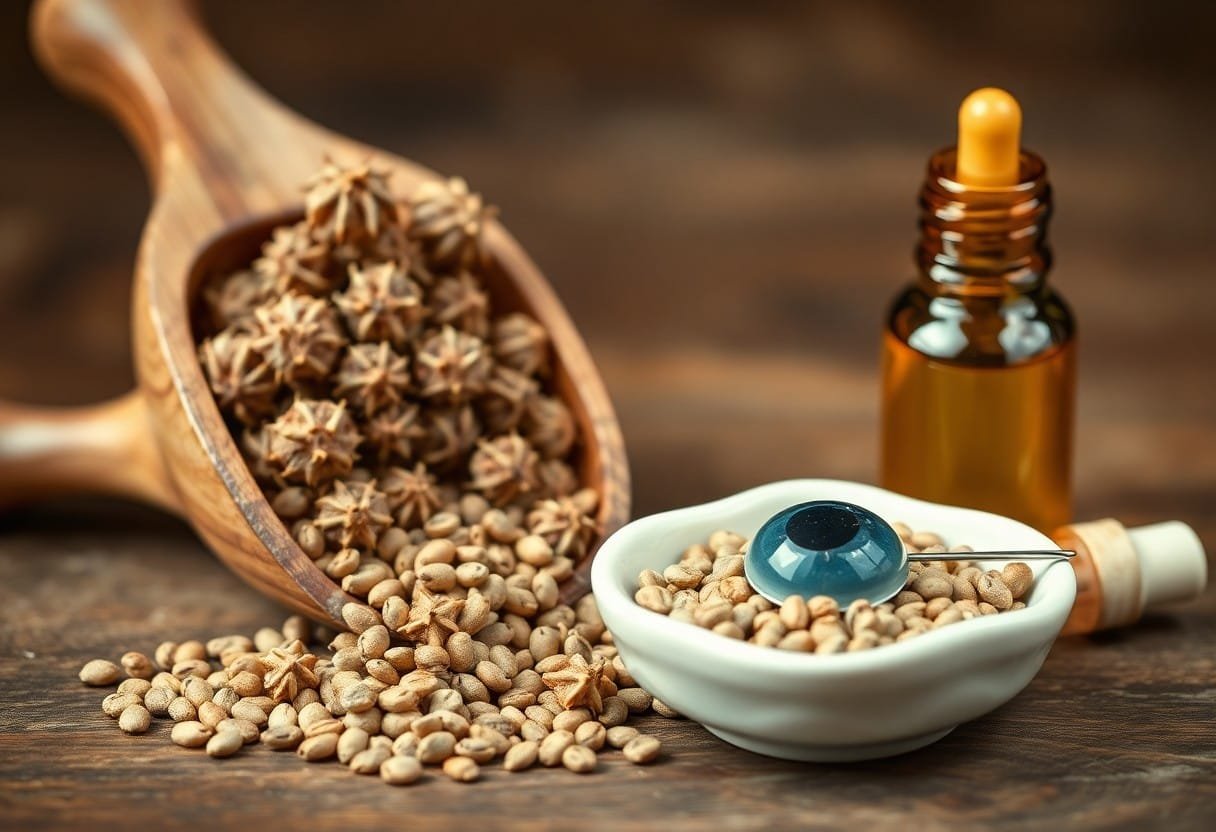
Botanically, Tribulus fruit is a small, spiny capsule from a trailing annual; you will notice its dense aromatic constituents concentrated in the dried fruit. Energetically it directs dispersing action to settle liver wind, reduce upward agitation, and address tension-driven headaches and visual disturbances.
Nature, Flavor, and Meridian Tropism
Flavor presents as acrid with a bitter edge and a generally neutral thermal nature, so you can apply it where dispersing without strong cooling or warming is desired. Meridian tropism centers on the Liver, with a secondary affinity for the Gallbladder, explaining its ability to benefit the eyes and soothe head symptoms.
Distinguishing Bai Ji Li within the Materia Medica
You can distinguish Bai Ji Li by its unique combination of ascending, dispersing action and ocular specificity; it moves constrained qi upward to relieve spasms and headaches rather than primarily nourishing yin or clearing heat like some other eye herbs.
Clinical use often appears in small doses (typically 3-9 g in decoctions) and in topical applications for itching and localized wind patterns; you should avoid use in pregnancy and under marked qi deficiency without practitioner guidance.
Therapeutic Actions: Calming the Liver and Extinguishing Wind
Bai Ji Li calms liver wind by anchoring rising yang and reducing tremors and vertigo, so you experience clearer vision and fewer involuntary spasms.
You notice reduced headaches and less photophobia when the herb is paired with other liver-calming agents, tailored to your presenting pattern.
Subduing Ascendant Liver Yang
Using small, steady doses, Bai Ji Li helps you anchor yang, relieve pressure behind the eyes, and lower the pulsatile headaches that ascend from the liver.
When you present with throbbing temporal pain and irritability, the herb directs excessive upward movement downward while preserving necessary warmth.
Resolving Liver Qi Stagnation and Constraints
Gentle dispersal of stagnation with Bai Ji Li eases chest and flank fullness, so you feel less emotional tightness and improved ocular comfort.
Pairing the herb with chaihu or xiangfu enhances its ability to move constrained liver qi, making it easier for you to release tension and restore visual clarity.
Dosage is typically modest; you should monitor effects and adjust to avoid overstimulating yang while sustaining qi-unbinding benefits and clearer vision, consulting a clinician for pattern-specific guidance.
Clinical Applications for Ocular Health
Clinically you can integrate Tribulus preparations to address eye symptoms arising from liver wind, with you often noticing reduced pressure and fewer headache-associated visual disturbances.
Practitioners recommend brief treatment cycles for recurrent issues, asking you to monitor for irritation while assessing improvements in clarity and discomfort.
Treatment of Redness, Swelling, and Pain
When redness, swelling, and pain flare, you may use Tribulus adjunctively to calm inflammation and relieve periocular soreness.
Topically applied dilute extracts can reduce conjunctival hyperemia and ease lid tenderness, but you should confirm safety with an eye specialist before use.
Clearing Superficial Visual Obstructions and Blurred Vision
Internally administered formulas are used to clear superficial visual obstructions linked to wind-heat or blood stasis, helping you recover sharper vision in mild cases.
For persistent blurring, combining systemic approaches with topical cleansing supports removal of debris while you address underlying tension and dryness.
Combining Tribulus with gentle saline washes and short-term anti-inflammatory herbs under practitioner guidance can help you clear surface deposits and improve contrast sensitivity.
Addressing Headaches and Neurological Symptoms
Bai Ji Li calms Liver wind and reduces headache intensity so you can experience clearer vision and less scalp sensitivity; consult product details at Bai Ji Li – 白蒺藜 – Tribulus Fruit for formulation specifics.
Relief of Distending Headaches and Vertigo
You may find reduced distending pressure and less vertigo when Bai Ji Li is used to settle errant yang and ease qi constraint around the head and eyes.
Managing Wind-Heat Disturbances in the Upper Body
Clinical use targets upper-body wind-heat signs so you can see reductions in redness, sore throat, and tense neck muscles while maintaining visual clarity.
Research indicates you can pair Bai Ji Li with cooling herbs to address acute heat symptoms, helping moderate inflammation and sustain its wind-dispersing effects for neurological relief.
Dermatological Benefits: Dispersing Wind and Relieving Itching
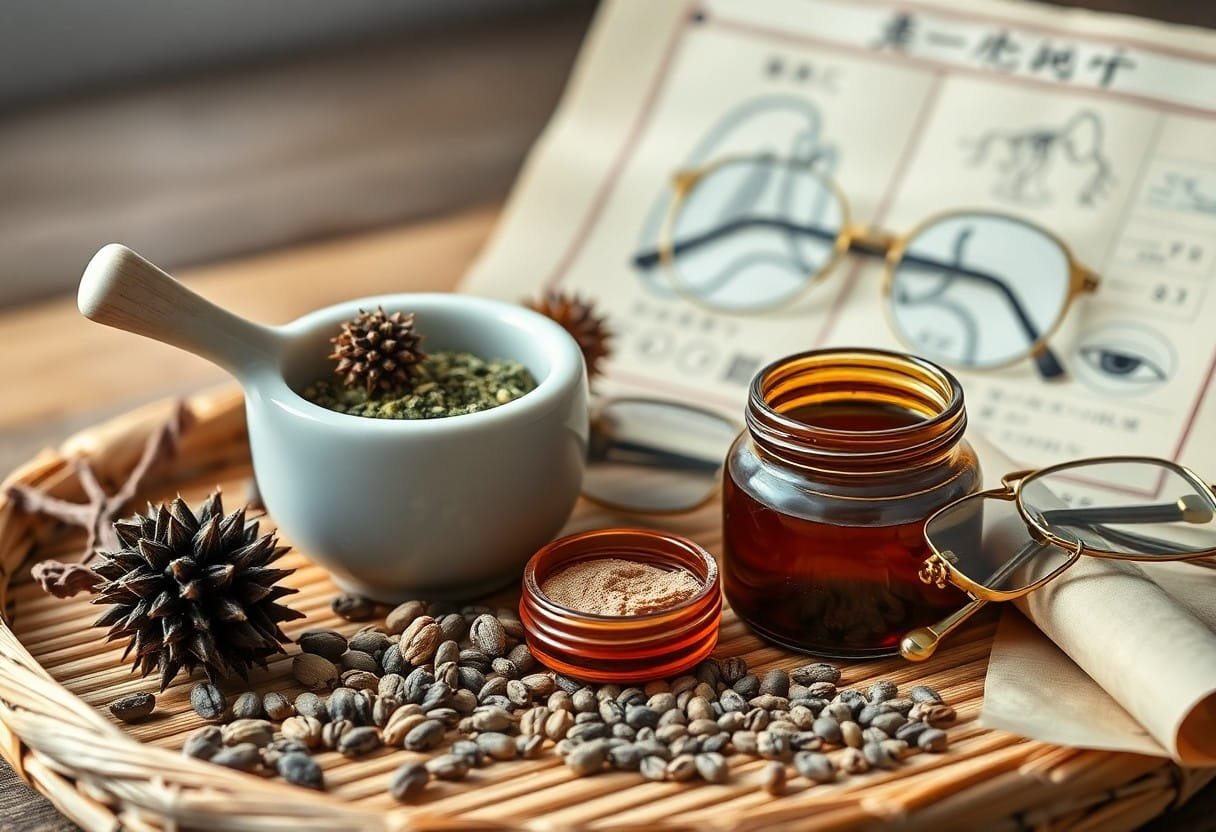
Bai (Ci) Ji Li’s acrid-warm nature disperses wind from the skin and calms overactive sensory nerves, so you often notice less itching and fewer scratch-induced lesions when it’s included in formulas or applied topically in traditional preparations.
Clinical practice pairs Bai with cooling or blood-moving herbs to shorten flare-ups; you may find it reduces reliance on antihistamines for mild-to-moderate cases when used under professional guidance.
Applications for Chronic Pruritus and Urticaria
You will encounter Bai in formulas aimed at recurrent itching and hives, where it moderates cutaneous hypersensitivity and helps break cycles of scratching and inflammation over repeated courses.
Role in the Treatment of Vitiligo and Skin Lesions
Topically applied Bai is used to stimulate local circulation and disperse stagnant wind, and you may see repigmentation improve when it is paired with blood-invigorating and kidney-tonifying therapies.
Combined with phototherapy and herbs that nourish blood and yin, Bai supports lesion resolution and could accelerate perifollicular repigmentation, though you should expect slow changes and follow practitioner guidance.
Formulation, Dosage, and Safety Guidelines
Dosing in formulas typically ranges 3-9 g of the dried fruit per day in decoction; you may use 1-3 g of concentrated extract for standardized supplements. Adjust lower for elderly, children, or those with sensitivity and always follow practitioner guidance.
Monitor for gastrointestinal upset, sleep changes, or mood shifts when you begin treatment and stop if adverse effects appear. Avoid combining with hormone therapies or immune-modulating drugs without professional oversight.
Traditional Pairings and Preparation Methods
Combine Bai Ji Li with Ju Hua and Sang Ye for eye redness and with Tian Ma plus Chuan Xiong when you address liver-wind headaches; you will often use it in small, harmonizing doses within formulas.
Prepare the fruit by lightly crushing it before simmering 15-20 minutes; you can also steep crushed fruit with chrysanthemum as a cooling eye tea. Adjust steep time to match desired potency and sensitivity.
Essential Contraindications and Use in Pregnancy
Avoid Bai Ji Li if you have hormone-sensitive cancers, severe liver disease, or take immune-modulating medications; you should consult your provider when on multiple prescriptions.
If you are pregnant or breastfeeding, do not use Bai Ji Li because safety data are limited and uterine-stimulating properties are suspected; choose safer alternatives until cleared by your clinician.
Consult a qualified herbalist or physician before combining Bai Ji Li with anticoagulants or medications for blood pressure and diabetes; you should use short courses and monitor blood pressure and glucose while on the herb.
Summing up
From above you see Bai (Ci) Ji Li (Tribulus fruit) as a traditional herb that calms liver wind and enhances vision; you can apply it for headaches, eye pain, dizziness and photophobia by dispersing wind and relieving spasms. Consult a qualified practitioner for appropriate dosing and to check interactions with medications.