

Many practitioners use Bai Shao (White Peony Root) when you need blood-nourishing support for menstrual pain and irregular cycles; consult evidence and tradition via Bai shao (Paeonia lactiflora): Benefits, Uses, Safety to assess benefits and precautions.
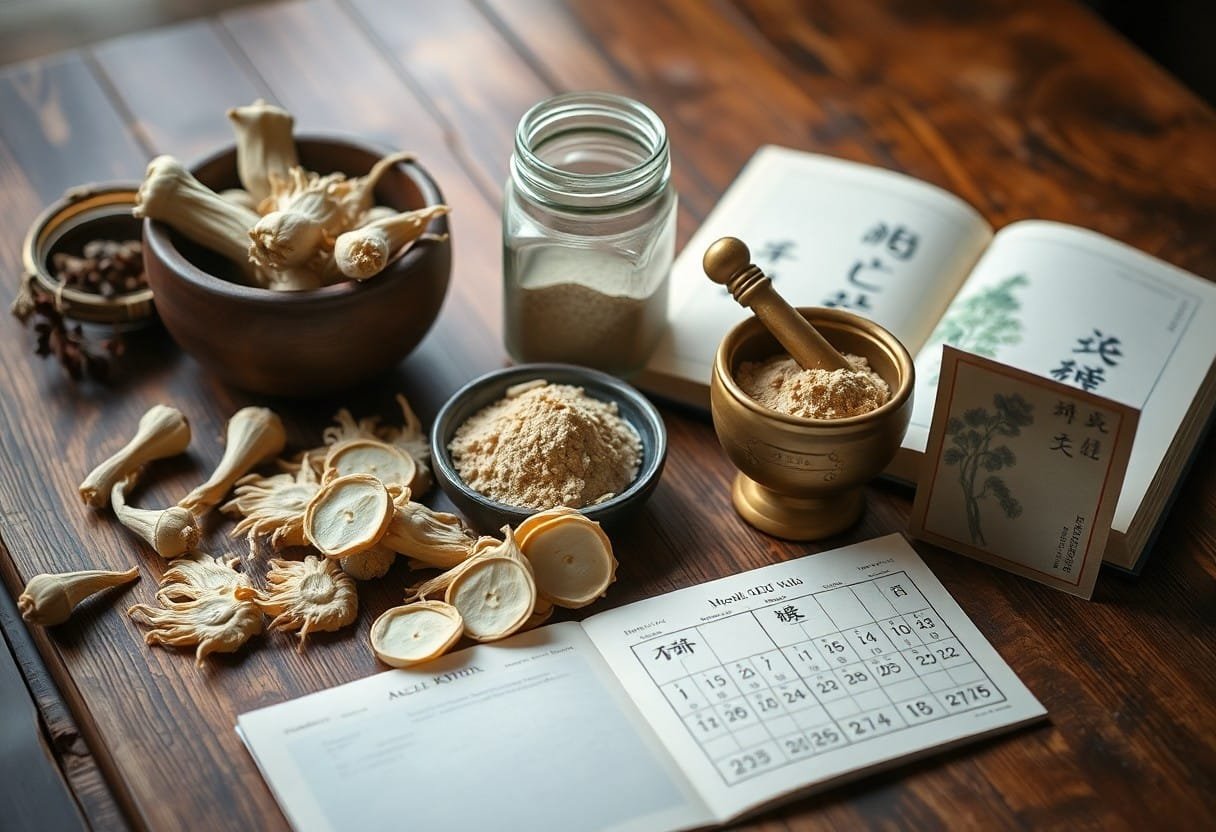
Key Takeaways:
- Bai Shao (White Peony Root) nourishes blood, preserves yin, softens the liver, and relieves pain, commonly used for dysmenorrhea, irregular menstruation, and abdominal cramps.
- Common clinical uses include formulas such as Xiao Yao San and Shao Yao Gan Cao Tang; typical dose is 6-15 g as a decoction, often paired with Chai Hu to regulate liver-blood balance.
- Precautions: cooling and astringent properties may worsen spleen-stomach cold or severe constipation; use caution in pregnancy, nursing, or with anticoagulant therapy and consult a qualified practitioner.
Botanical Profile and Processing
Botanical profile combines morphology and processing notes so you can identify Bai Shao by its pinnate leaves, rose-like flowers, and pale, fleshy roots that store analgesic and blood-nourishing constituents.
Roots are harvested in autumn; you should prefer large, dense roots with smooth surfaces, since peeling and controlled drying modulate bitterness and help preserve paeoniflorin and related glycosides.
Paeonia lactiflora: Origin and Characteristics
Paeonia lactiflora originated in China and Central Asia and thrives in temperate zones, so you should note flower color, leaf arrangement, and perennial habit when assessing plant material for consistency.
Native populations were selected for larger, milky-white roots and milder taste, which means you should prioritize cultivated strains labeled as White Peony to ensure predictable medicinal quality.
Traditional Preparation: Peeling, Boiling, and Drying
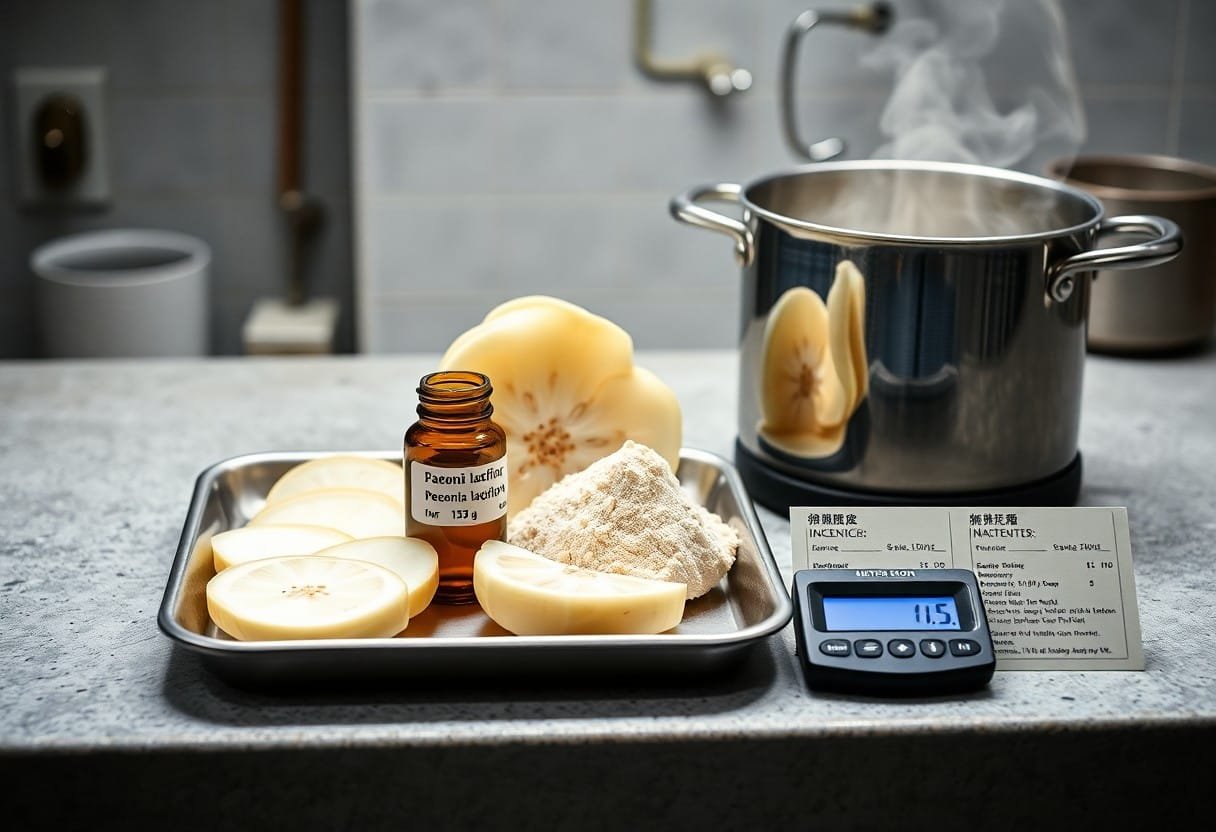
Traditional methods begin with careful hand-peeling to remove the corky cortex, because you reduce tannins and harsh flavors before moving to thermal processing that stabilizes active compounds.
Peeling is followed by blanching or brief boiling to fix color and lessen irritants; you should slice roots uniformly so heat penetrates evenly and extraction remains consistent.
Boiling time and water ratio directly influence chemical profile, so you should use shorter decoctions to retain volatiles and longer simmering to extract glycosides, then dry slices slowly to prevent degradation or mold.
Core TCM Energetics and Functions
Bai Shao is sour, bitter and slightly cool, entering the Liver and Spleen meridians to nourish blood, soften constrained liver, and relieve spasmodic pain; you can consult White Peony Root: Potential Benefits, Side Effects, Uses for complementary information.
Entering the Liver and Spleen Meridians
When you consider meridian entry, Bai Shao’s affinity for the Liver explains its role in regulating menses and calming liver-related pain, while Spleen entry supports blood stability and digestion, so you use it for patterns combining blood deficiency with liver constraint.
Actions: Tonifying Blood and Preserving Yin
You use Bai Shao to tonify blood and preserve yin, which helps soften liver spasms, reduce cramping, and moderate excessive yang activity that can worsen menstrual irregularities and pain.
Clinically, you often pair it with Dang Gui to strengthen blood nourishment and with Chuan Xiong to move qi; assess bleeding risk if the patient takes anticoagulants and avoid it in heavy cold-damp patterns without warming herbs.

Therapeutic Focus: Menstrual Health
Bai Shao nourishes blood and softens liver constraints, helping you stabilize menstrual rhythm and reduce pain when blood deficiency and stagnation coexist.
Regulating Irregular Cycles and Amenorrhea
When scanty or absent menses stem from blood deficiency, you can use Bai Shao to replenish blood and support return of cyclicity, often combined with warming tonics under practitioner guidance.
Relieving Dysmenorrhea and PMS Symptoms
You may notice reduced cramping and mood swings as Bai Shao relaxes uterine spasms and soothes liver-qi in patterns of blood deficiency with constraint.
Use Bai Shao with qi-moving or analgesic herbs to address pain and premenstrual bloating, adjusting combinations and dose according to your pattern and symptom severity under professional supervision.
Management of Pain and Muscle Spasms
Bai Shao soothes muscle tension while nourishing blood, so you may experience reduced pain and fewer spasms when it is integrated into your treatment plan alongside appropriate herbs.
Clinical usage favors Bai Shao for softening constrained tissue and calming excess movement, allowing you to gain symptomatic relief from cramping without heavy sedation.
Antispasmodic Action on Smooth and Skeletal Muscle
You will find Bai Shao exhibits antispasmodic effects on both smooth and skeletal muscle, which helps lower spasm intensity and frequency through modulation of muscular excitability.
Research supports that combining Bai Shao with complementary herbs can enhance muscle relaxation, so you should consider formula context and dosing to optimize therapeutic benefit.
Application in Abdominal Pain and Limb Cramps
For abdominal pain from menstrual cramps or intestinal spasms, Bai Shao can soften uterine and intestinal contractions while improving blood circulation, often diminishing pain severity.
Orally administered decoctions or tinctures provide systemic antispasmodic action, and you may choose warming partners when a cold pattern is present to better relieve symptoms.
Dosing varies by individual; consult a qualified practitioner so you receive personalized guidance and avoid self-prescribing if you are pregnant or taking anticoagulants, since safety depends on your clinical picture.
Liver Regulation and Emotional Balance
Bai Shao calms liver qi while nourishing blood, so you experience fewer mood swings and less tension during cyclical changes.
You often notice calmer affect and smoother menstrual rhythms when Bai Shao is paired with liver-moving herbs, reducing irritability without overstimulating yang.
Softening the Liver to Calm Rising Yang
Gentle action of Bai Shao relaxes liver sinews and moderates upward-floating yang, helping you release neck and shoulder tightness and diminish head pressure.
Addressing Irritability, Headaches, and Dizziness
Clinical observation finds Bai Shao pacifies liver yang while replenishing blood, which can lessen irritability, vascular tension behind headaches, and episodes of dizziness you may experience.
Combined with Chai Hu or Xia Ku Cao in tailored formulas, Bai Shao helps you regulate qi flow, reduce spasmodic discomfort, and stabilize symptoms that flare with hormonal shifts.

Modern Pharmacology and Safety
Research demonstrates that Bai Shao’s constituents exhibit anti-inflammatory, antispasmodic, and analgesic effects in preclinical models, which align with its traditional use for menstrual pain and muscle cramping; you should consider these mechanisms when evaluating potential benefits.
Clinical evidence is limited to small trials and observational studies showing modest symptom improvement and generally good tolerance; you should prioritize standardized extracts and consult a practitioner to assess dose and duration relative to your needs.
Active Compounds: Paeoniflorin and Total Glucosides
Paeoniflorin is the dominant bioactive glycoside linked to antispasmodic and anti-inflammatory actions, and you may experience relief via modulation of inflammatory mediators and central pain pathways.
Studies on total glucosides of paeony (TGP) report immunomodulatory and hepatoprotective effects in controlled settings, so you should seek products with verified TGP content for consistent therapeutic effect.
Contraindications and Drug Interactions
Patients taking anticoagulant or antiplatelet medications should avoid Bai Shao unless your clinician closely monitors coagulation, because paeoniflorin can potentiate bleeding risk by inhibiting platelet aggregation.
Avoid high-dose use during pregnancy and lactation without professional oversight, as safety data are sparse and you may expose a fetus or infant to active glycosides.
Co-administration with drugs that affect CYP enzymes, immunosuppressants, or sedatives may alter pharmacologic responses; you should disclose Bai Shao use to prescribers and monitor for increased bleeding, altered drug levels, or unexpected side effects.
Final Words
With these considerations you should use Bai Shao (white peony root) as a blood-nourishing option to relieve menstrual pain and regulate cycles under the guidance of a licensed TCM practitioner. You must tell your healthcare provider about other medications, especially anticoagulants or hormonal treatments, and watch for digestive upset or allergic signs. Appropriate dosing and individualized herb combinations will maximize benefit while lowering risk.