

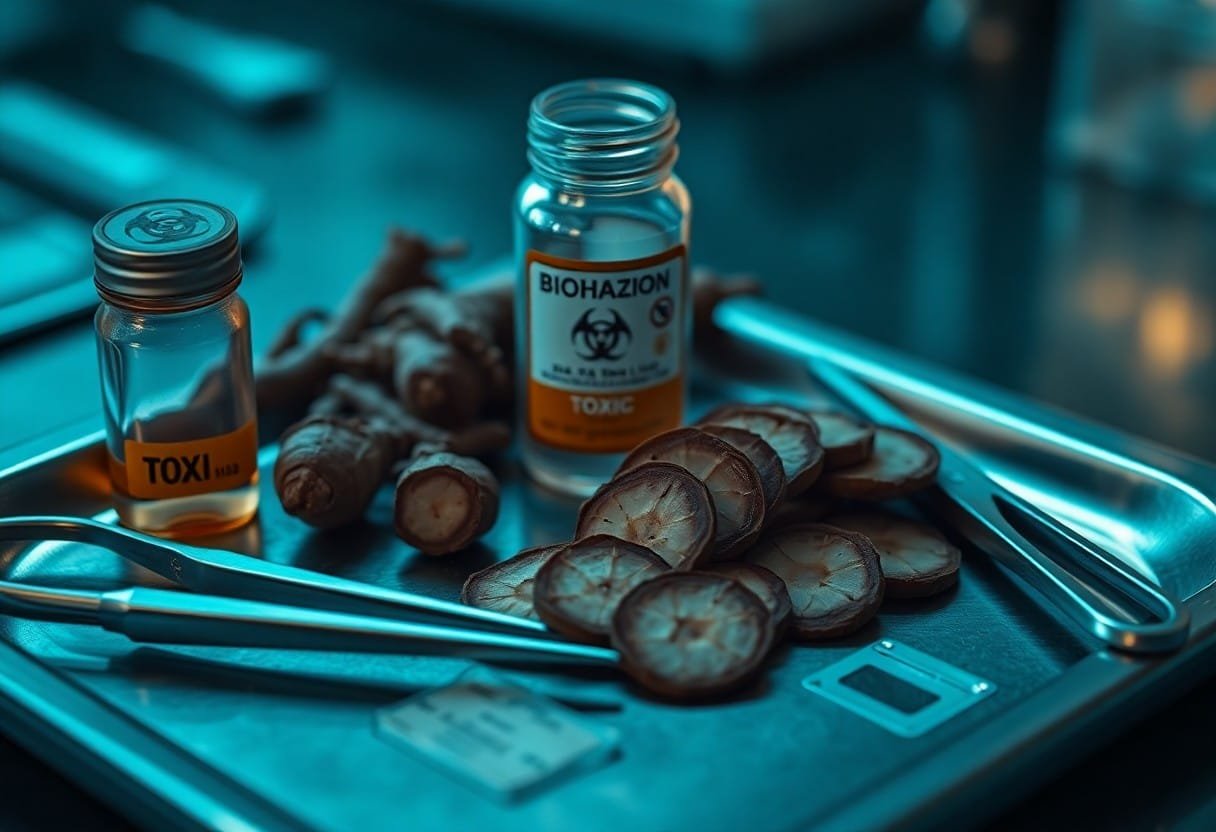
Most herbalists warn you that Ba Jiao Lian (Dysosma Root) is a toxic medicinal herb used against tumors and stubborn masses; you must handle it with extreme caution because potent alkaloids can cause severe poisoning.
Key Takeaways:
- Ba Jiao Lian (Dysosma root) contains cytotoxic lignans such as podophyllotoxin that have been used in traditional medicine to target tumors and stubborn masses.
- High systemic toxicity limits oral or unregulated use; reported adverse effects include gastrointestinal distress, bone marrow suppression, hepatotoxicity, nephrotoxicity, and potential fatality in overdose.
- Clinical use requires standardized preparations and medical supervision; avoid use in pregnancy, children, or patients with liver or kidney impairment and monitor for interactions with anticancer or enzyme-modulating drugs.
Botanical Profile and Phytochemistry of Dysosma Root
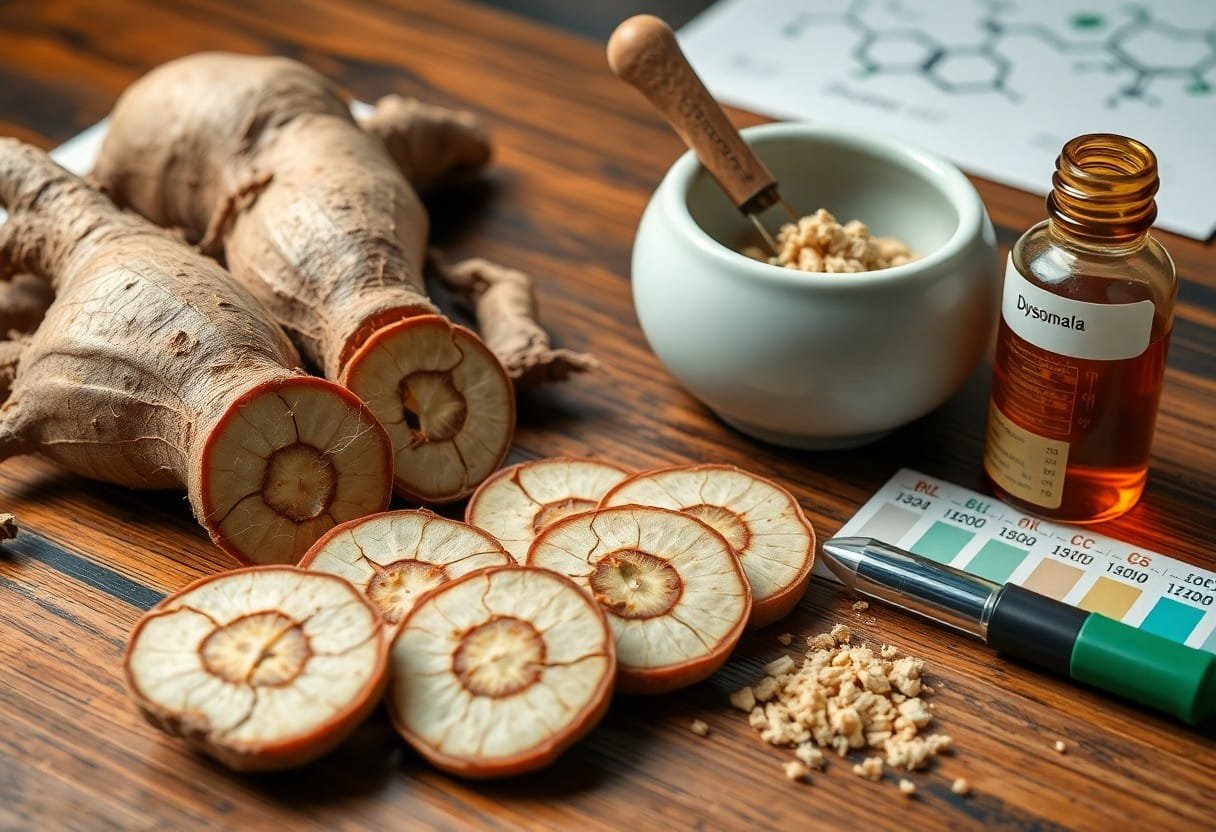
Dysosma is a shade-loving perennial with a stout, dark rhizome that you should treat as highly toxic; its foliage is peltate and flowers are nodding, while the root accumulates a suite of lignans and phenolics responsible for both antitumor interest and serious poisoning risk if mishandled.
Species Identification and Natural Habitat
Native to moist, temperate understories of China and nearby regions, Dysosma species prefer humus-rich, shaded slopes where you may find clustered colonies; you should note the distinctive umbrella leaves and reddish-brown rootstock. Similar Podophyllum relatives can confuse field ID, so you must avoid harvesting unless identification is certain to prevent severe poisoning.
Key Active Constituents: Podophyllotoxin and Lignans
Podophyllotoxin occurs in concentrated form in the root, and you should recognize it as a potent antimitotic agent that disrupts microtubules; its derivatives are used pharmaceutically, but the native compound in Dysosma is systemically toxic and can cause bone marrow suppression.
Lignans beyond podophyllotoxin create a complex phytochemical profile that you will encounter in extracts, modulating both cytotoxic effects and metabolic processing; crude preparations markedly increase the risk of adverse reactions compared with purified, regulated drugs.
Clinical research produced chemotherapy agents derived from podophyllotoxin, yet if you handle or contemplate traditional use you must understand that raw Dysosma root carries life-threatening risks-hepatic, hematologic, and gastrointestinal toxicity-and you must not self-administer without expert supervision.
Traditional Chinese Medicine Energetics and Functions
In TCM you observe Ba Jiao Lian as bitter, cold and mildly toxic, traditionally guided to the Liver and Kidney channels. You see it applied to clear deep heat and resolve toxic bind, so you must respect dosage and clinical context.
Clearing Heat-Toxicity and Reducing Swelling
You will find Ba Jiao Lian used to clear heat-toxicity, reduce swelling and soften abscesses, often paired with cooling and dispersing herbs. You must avoid self-prescription because its potency carries real risk of adverse reactions when misused.
Resolving Stasis and Dissipating Stubborn Hard Masses
Observe Ba Jiao Lian when practitioners aim to break blood stasis and dissipate fixed, hard masses; you may see it combined with blood-moving and softening agents to address chronic nodules. You should expect strong action that demands precise formulation.
Caution is warranted because you may experience gastrointestinal upset, hepatic stress or systemic toxicity; you should only use Ba Jiao Lian under qualified supervision with monitoring and limited duration to reduce harm.
Clinical Applications in Oncology and Chronic Disease
You will encounter Dysosma (Ba Jiao Lian) in oncology discussions as a historically used, toxic herb with reported antitumor activity that demands specialist oversight.
This root shows apoptosis-inducing effects in preclinical studies, yet you must balance those findings against documented hepatotoxic and cardiotoxic risks and limited clinical evidence.
Therapeutic Use in Malignant Tumors and Carcinomas
Studies of Dysosma extracts reveal cytotoxicity toward carcinoma cell lines, so you may consider it as an adjunct only within controlled trials and with informed consent.
When you apply it clinically, coordinate with oncologists and monitor organ function closely because unregulated use carries risk of severe poisoning.
Management of Goiters, Scrophula, and Lymphatic Masses
Traditional formulas used Ba Jiao Lian to reduce chronic nodular masses, and you may observe shrinkage in goiters and scrofulous swellings in anecdotal reports.
Because systemic toxicity can be cumulative, you must avoid self-treatment and ensure serial labs and specialist review to detect early organ damage.
Always obtain imaging and histologic confirmation before considering toxic herbal interventions, and you should prioritize surgical, endocrine, or oncologic standards while reserving Dysosma as a carefully supervised adjunct due to its fatal overdose potential.
Pharmacological Mechanisms of Action
Mechanisms of Ba Jiao Lian center on multiple biochemical pathways: plant lignans interact with microtubules and DNA-processing enzymes, while extracts modulate inflammatory signaling, producing both anticancer activity and systemic toxicity. You should weigh evidence that potent cytotoxic constituents drive tumor cell death but also carry significant toxicity risks.
Cytotoxic Effects and Inhibition of Mitosis
Compounds such as podophyllotoxin derivatives disrupt mitotic spindles and arrest cell cycles, inducing apoptosis in tumor lines; you may observe marked inhibition of mitosis in vitro. Be aware that the same mechanisms produce toxicity in proliferating normal tissues, narrowing any potential therapeutic window.
Anti-inflammatory and Immunomodulatory Properties
Studies report suppression of pro-inflammatory cytokines and inhibition of NF-κB signaling, so you can expect reduced tumor-associated inflammation and altered immune responses. Such anti-inflammatory modulation can aid tumor control but may also blunt protective immunity.
Clinical and preclinical data remain limited; you must avoid self-treatment because extracts can cause hepatotoxicity, myelosuppression and unpredictable immunosuppression, and interactions with chemotherapy are possible, so consult a specialist before any use.
Toxicity Profile and Safety Management
You must treat Ba Jiao Lian as a potent toxicant rather than a benign herb, because podophyllotoxin carries a high risk of systemic toxicity, including bone marrow suppression, severe gastrointestinal injury, and multi-organ failure, and you should never self-administer it outside specialized care.
Exposure pathways include ingestion, topical misuse, or inhalation, and you should seek emergency evaluation immediately for decontamination, serial blood counts, and organ support while notifying poison control and your supervising clinician.
Recognition of Podophyllotoxin Poisoning Symptoms
Skin reactions often appear first and you may see severe local pain, erosions, necrosis, or peripheral neuropathy after topical misuse, with rapid progression to ulceration in high exposures.
Systemic signs you must watch for include nausea, vomiting, abdominal pain, dizziness, paresthesia, hypotension, and falling blood counts that indicate marrow suppression and risk of infection or bleeding.
Critical Dosage Restrictions and Contraindications
Oral or high-dose exposure has a narrow margin between any effect and life-threatening toxicity, so you must avoid internal use; even small, repeated doses can produce fatal hematologic collapse, and children are especially vulnerable.
Pregnancy, breastfeeding, severe hepatic or renal impairment, and immunosuppression are absolute contraindications for any podophyllotoxin exposure, and you should not use it if you fall into these categories.
If you encounter medically prescribed podophyllotoxin products, you must follow specialist dosing and monitoring protocols only, and you should cease exposure and seek urgent care for any suspected overdose or unexplained systemic symptoms.
Preparation and Administration Methods
You must treat Ba Jiao Lian as a highly toxic herb; do not self-prescribe and restrict use to qualified practitioners who monitor dosing, interactions, and labs. Typical forms include powdered extracts, decoctions, and topical applications, each with different absorption and risk profiles.
Careful processing-proper washing, controlled heating, and precise portioning-can reduce some toxicity while preserving activity; however, misprocessing can cause severe poisoning, so you must follow standardized protocols and avoid use in pregnancy, liver disease, or with anticoagulants.
Internal Decoction Protocols and Processing
Decoctions are prepared in small batches with strict timing: you should simmer minimal amounts, discard foamy scum, and strain thoroughly; clinical formulas usually dilute strength and combine Ba Jiao Lian with protective herbs. Never exceed prescribed dose.
Consult a licensed herbalist before any internal use, and expect regular lab checks for liver and blood parameters; your practitioner may extend boiling times or pair herbs to lower toxicity while aiming for a therapeutic effect.
External Applications for Localized Masses
Topical preparations-poultices or concentrated extracts-are applied sparingly to intact skin over masses under professional supervision; you must avoid open wounds and limit contact time to reduce systemic uptake. Extremely toxic if overused.
Apply medicated compresses only with clear instructions; you should watch for severe local irritation, blistering, or systemic signs and remove the application immediately if adverse effects appear, seeking urgent care for poisoning symptoms.
Monitor treatment areas daily, photograph progress, and report fever, nausea, or neurological changes promptly; your clinician may alternate with protective topical agents to reduce penetration and will stop treatment at the first sign of harm.
To wrap up
Following this, you should treat Ba Jiao Lian (Dysosma root) as a potent, toxic herb historically used against tumors and stubborn masses; you must not self-prescribe and should consult an oncologist or herbalist familiar with cytotoxic herbs. You can compare safety notes with Huanglian resources before discussing options with your care team.