

BaDou is a powerful croton seed used as a drastic purgative for severe cold accumulation; you must administer under expert supervision because of its high toxicity, while it can rapidly resolve entrenched cold-congestive patterns when properly dosed.

Key Takeaways:
- Ba Dou (Croton seed) is a powerful drastic purgative and interior-warming herb used for severe cold-accumulation in the intestines, presenting with intense abdominal cold pain, deep-seated constipation, and focal distention.
- High toxicity mandates minimal, properly processed dosing (commonly 0.03-0.1 g when used internally) and strict clinical supervision; contraindicated in pregnancy, frailty, yin deficiency, or heat-patterns.
- Clinical use is rare and reserved for acute, refractory cold-accumulation cases; topical applications exist for localized stagnation, but internal administration should be a last-resort under experienced practitioners.
Botanical Profile and TCM Energetics
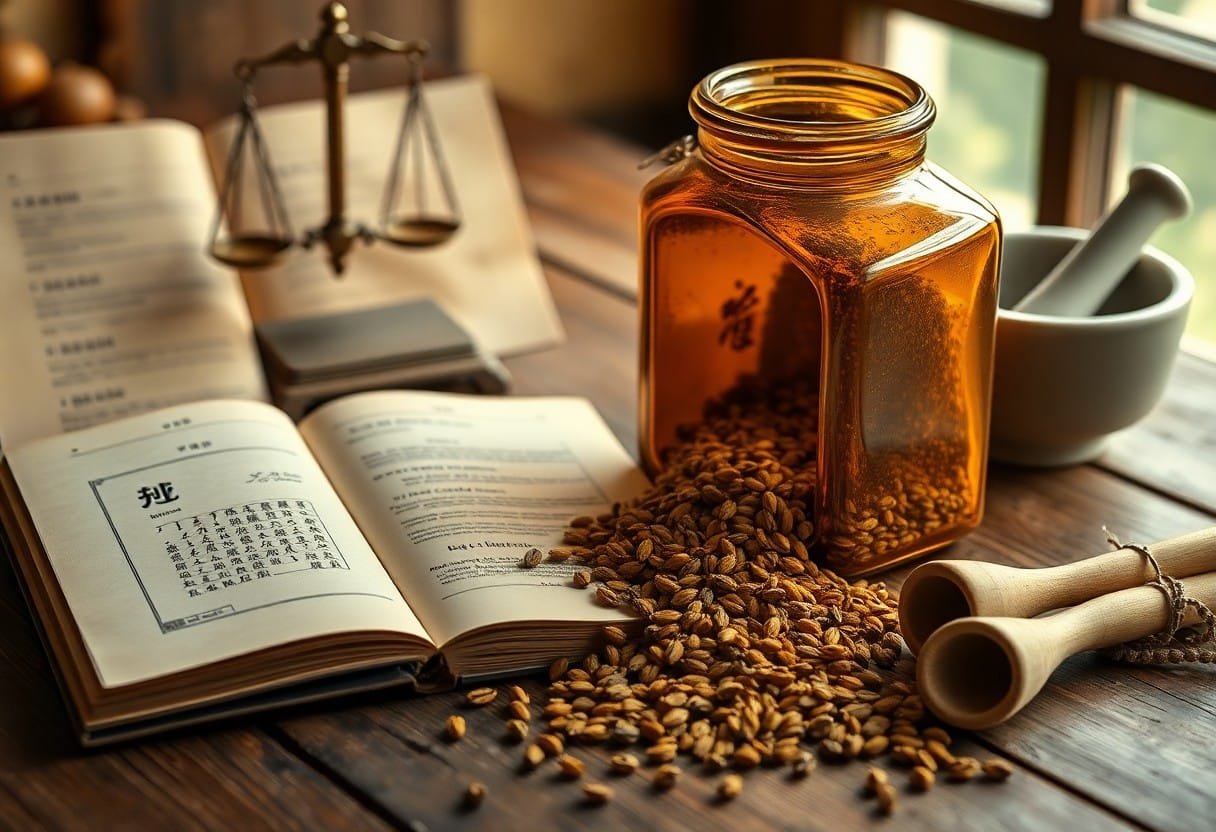
Ba Dou’s seed (Croton tiglium) is botanically a small tree native to South and Southeast Asia, producing three-seeded capsules whose wrinkled, oil-rich seeds are the medicinal portion. You must treat the seed as highly toxic and a drastic purgative, indicated only for severe cold accumulation under strict supervision.
TCM energetics assign Ba Dou a hot nature and pungent flavor, directing its action to the stomach and large intestine to warm the interior and expel cold stagnation. You should avoid use in weak, yin-deficient, or pregnant patients due to the high toxicity and strong downward-draining action.
Identification of Croton tiglium
You can identify Croton tiglium by glossy, oblong leaves, sticky new growth, and distinctive three-lobed capsules that split to reveal hard, brown seeds. Seeds are wrinkled, oily, and often yellow-brown; the raw seed is toxic, so you must not handle it casually.
Pungent Flavor and Hot Thermal Properties
Pungent flavor and hot thermal properties make Ba Dou effective for severe cold accumulation, rapidly moving stagnation and provoking strong bowel evacuation when misused. You will expect intense abdominal cramping and possible dehydration as part of its potent action.
Clinically, you rely on processed forms and minute doses with experienced oversight; dosing errors can produce severe vomiting, diarrhea, and systemic toxicity, and it is contraindicated in pregnancy, so extreme caution is mandatory.
Primary Therapeutic Actions
You will find Ba Dou acts as a drastic purgative that disperses deep-cold stagnation, warms the interior, and forces out obstructive accumulations, producing rapid relief of severe cold patterns while carrying significant risk.
When you consider its use, limit administration to minute, processed doses under clinical oversight because toxicity can cause violent purging, dehydration, and mucosal injury.
Drastic Purgation of Internal Cold Accumulation
Severe internal cold accumulation you experience-marked by intense abdominal cold pain, hard stools, and lack of bowel movement-responds to Ba Dou’s strong purgative action to expel stagnation.
Only use under experienced supervision, since you risk violent purgation, electrolyte loss, and it is contraindicated in pregnancy and the frail.
Dispersing Phlegm and Resolving Edema
If you face cold-phlegm obstruction with limb edema and reduced urination, Ba Dou’s warming, dispersing effect can mobilize retained fluids when combined appropriately with purgation.
Carefully titrate dose and monitor urine, stool, and hemodynamics because you can provoke dangerous fluid shifts and electrolyte imbalance.
Monitor for signs of intense diarrhea, severe abdominal cramping, rising pulse, or dizziness and stop use immediately, since you may develop severe dehydration or systemic toxicity requiring urgent care.
Clinical Indications for Severe Pathologies
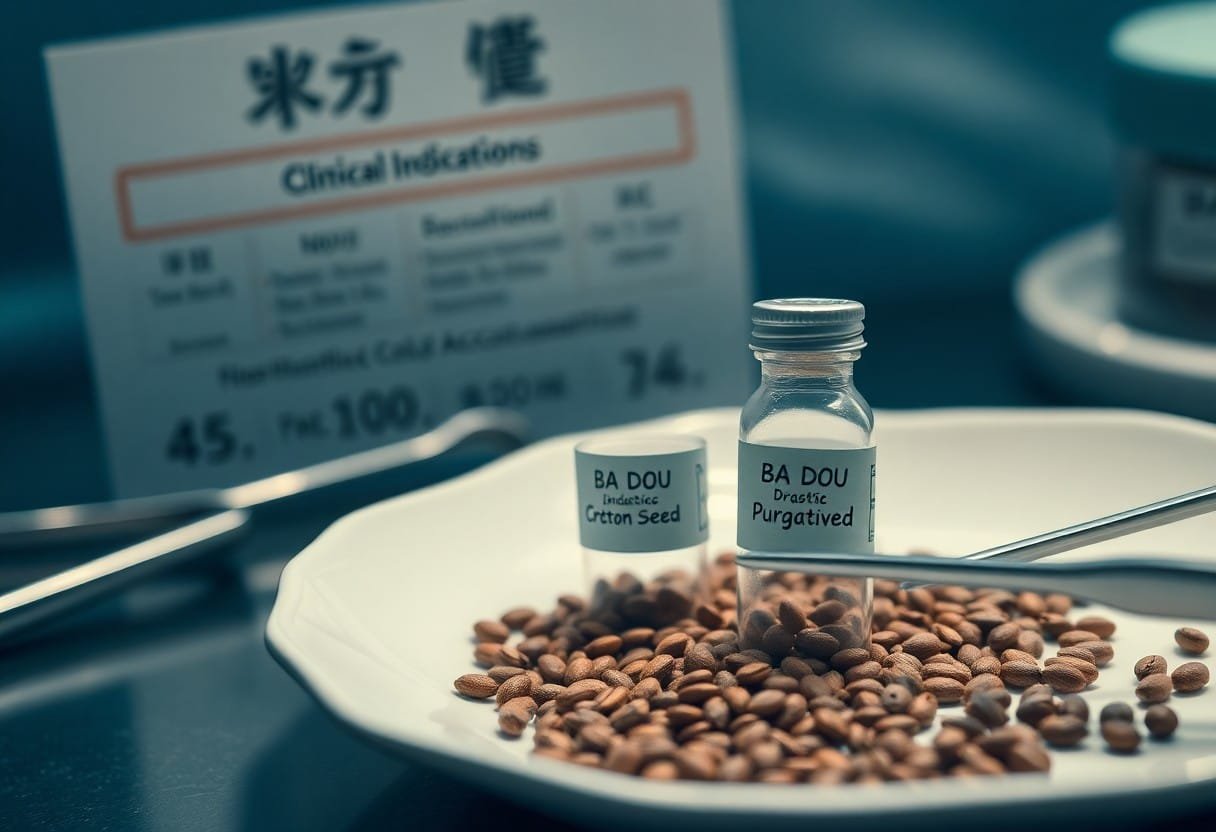
You should limit Ba Dou to patients with clear signs of severe cold accumulation-refractory abdominal pain, hard stool, and systemic coldness-using it only when gentler measures fail and you accept the risk of drastic purgation and serious toxicity.
Only administer under strict supervision with resuscitation prepared; you must titrate to the minimal effective amount, monitor vitals closely, and anticipate rapid evacuation with risks of dehydration and circulatory compromise.
Intestinal Obstruction and Cold-Induced Constipation
Cold-induced intestinal obstruction presenting with cold limbs, severe colicky pain, and hard fecal impaction may warrant Ba Dou to unblock severe stasis, but you must weigh the benefit against the high risk of mucosal injury and systemic toxicity.
Carefully evaluate for peritonitis or strangulation before you proceed; do not use Ba Dou when surgical compromise is suspected, and prepare aggressive fluid and electrolyte support if you proceed.
Ascites and Distention in the Abdominal Cavity
Severe ascites from cold stagnation can sometimes respond when you employ Ba Dou to drive purgation and relieve tension, though response is variable and you must monitor respiratory and renal status continuously.
If fluid is long-standing, infected, or accompanied by systemic signs, avoid indiscriminate purgation because Ba Dou may worsen systemic toxicity; integrate decongestive measures and referral as needed.
Observe closely for brisk purging after administration and be ready to manage vomiting, convulsions, or collapse; you must stop therapy at the first sign of severe adverse effects to reduce morbidity.
Essential Processing and Detoxification (Pao Zhi)
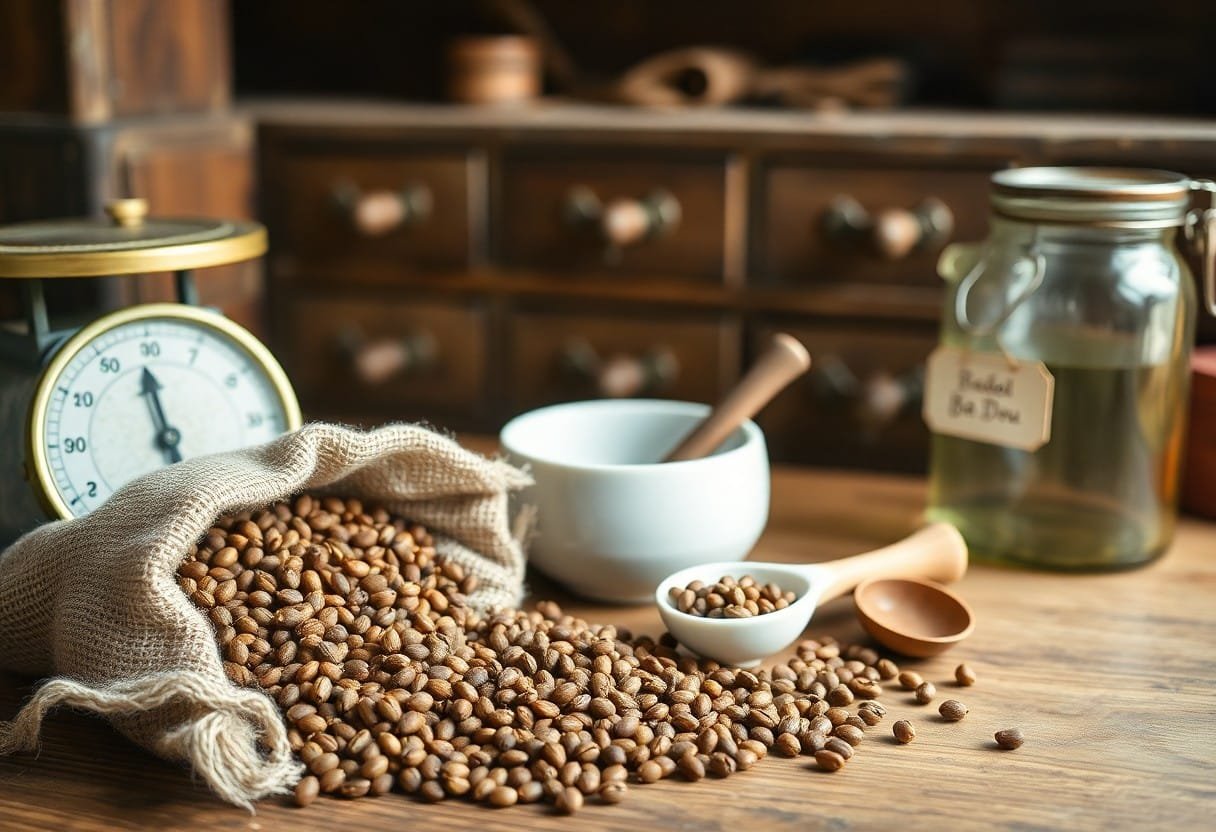
Processing aims to reduce the seed’s volatile oils and modulate its purgative strength so you can avoid uncontrolled gastrointestinal injury; traditional Pao Zhi combines washing, heating, and mechanical removal to lower acute toxicity.
Heat treatments such as dry-frying or calcining alter ester compounds and reduce irritancy, but you must observe strict time and temperature controls because processed material can still retain dangerous residual toxins.
The Role of Ba Dou Shuang (Defatted Croton Seed Powder)
Defatted powder removes much of the croton oil, producing a preparation that gives you a less violent purgative effect while lowering systemic absorption; this makes it useful within controlled formulas but not safe for casual use.
When you rely on Ba Dou Shuang, apply it only under professional guidance and within validated doses, since the powder can still provoke severe reactions and requires clinical oversight.
Methods for Reducing Chemical Toxicity
Soaking, repeated decoction, solvent defatting, and controlled roasting are practiced to reduce diterpene ester content; you should avoid improvised home extractions because improper handling increases the risk of exposure to irritant oils.
Practitioners use standardized protocols, combinatory herb processing, and dose titration so you receive therapeutic effect with minimized harm; always ensure a trained clinician verifies the preparation because even processed Ba Dou can be hazardous.
Analytical testing (HPLC, GC-MS) quantifies residual diterpene esters and oil content so you can confirm safety margins; insist on documented assay results and pharmacopeial compliance before clinical use to reduce the chance of toxic exposure.
Safety Precautions and Contraindications
You should only use Ba Dou under experienced supervision for short, targeted courses; avoid it if you are pregnant, breastfeeding, a child, elderly, or have yin/blood deficiency, severe weakness, or active bleeding. Monitor for severe vomiting, profuse diarrhea, intense abdominal pain, or neurologic changes and stop immediately if they occur.
Toxicity Management and Adverse Reaction Protocols
If you experience adverse reactions, discontinue Ba Dou and seek emergency care; for serious poisoning request activated charcoal, aggressive IV fluids, electrolyte monitoring, and seizure control per emergency protocol. Contact poison control with dose and timing details; dehydration, hypotension, and shock are life‑threatening.
Prohibited Herb Combinations and Patient Restrictions
Avoid combining Ba Dou with tonic or astringent herbs such as Ren Shen (ginseng), Shu Di Huang, or Dang Shen, with other powerful cathartics, or with warming, drying formulas; you should not give it to patients with active GI ulceration or severe frailty. Pregnancy is an absolute contraindication.
Patients on anticoagulants, cardiac drugs, or those with baseline electrolyte disturbances must not use Ba Dou without specialist clearance; you should arrange lab monitoring after exposure and obtain informed consent because of the high risk of electrolyte loss and systemic toxicity.
Integration into Traditional Formularies
Practitioners fold Ba Dou into emergency cold-accumulation formulas for severe stagnation, using tiny, processed doses to harness its extreme purgative action while minimizing risk, and you must only administer under expert supervision because raw seed is highly toxic.
Dosage modifications pair Ba Dou with warming, harmonizing herbs so you achieve dispersion without systemic shock, and many lineages insist on proper processing that reduces toxicity alongside immediate recuperative measures you provide to the patient.
Classic Prescriptions for Acute Stagnation
Formulas such as modified Xiao Cheng Qi Tang and emergency decoctions include minute amounts of Ba Dou for obstinate cold-retention with severe constipation and abdominal pain, and you use these only in acute, time-limited contexts rather than chronic management.
Several classical combinations buffer Ba Dou’s harshness by adding gan cao, processed ginger, and calibrated aconite preparations so you obtain effective evacuation while protecting the yang and avoiding collapse.
Synergistic Herb Pairing for Potency Control
Pairings with moderating herbs-processed ginger, gan cao, and tightly dosed fuzi-let you temper Ba Dou’s action; follow strict sequencing and timing to prevent compounded toxicity while achieving therapeutic purge.
Guidance from experienced clinicians is mandatory because the dose-response window is narrow; you will monitor vital signs closely and withdraw at any sign of systemic distress or excessive purgation.
Supplementary measures such as post-purge tonics, electrolyte management, and short courses help you restore fluids and qi promptly, thereby minimizing cumulative toxicity after Ba Dou use.
Final Words
With these considerations you should treat Ba Dou (Croton Seed) as a drastic purgative reserved for severe cold accumulation patterns and never as a routine tonic. You must consult a qualified practitioner before use, monitor for intense purgation and toxicity, and avoid use in pregnancy or weak constitutions. Learn more from Chinese Herb: Ba Dou (Croton Seed), Crotonis Fructus.