
Herb Bai Fu Zi (Typhonium rhizome) equips you to address facial paralysis and seizures, outlining indications, dosing, contraindications, and toxicity; consult a qualified practitioner before use.
Key Takeaways:
- Bai Fu Zi (Typhonium rhizome): used in traditional Chinese medicine to dispel wind and phlegm, commonly indicated for facial paralysis (Bell’s palsy), hemiplegia, facial numbness, and convulsions.
- Processing and toxicity: raw rhizome contains irritant calcium oxalate crystals and other toxic constituents; proper processing reduces mucosal irritation but improper use can cause oral/throat burning, swelling, vomiting, or dermatitis.
- Clinical precautions: use only under a qualified practitioner’s guidance, avoid raw ingestion and application to broken skin, and exercise caution in pregnancy and patients prone to mucosal or allergic reactions; monitor closely for adverse effects.
Botanical Identity and Processing of Typhonium giganteum
Typhonium giganteum belongs to the Araceae family with a fleshy tuberous rhizome and hooded spathe, and you can identify it by broad sagittate leaves and a subterranean storage organ commonly used in materia medica.
Rhizomes are harvested after foliage senescence, cleaned, sliced and either air-dried or steamed to reduce sharp calcium oxalate crystals, and you should treat raw material as irritating until properly processed.
Distinguishing Typhonium from Aconitum species
When you compare Typhonium with Aconitum, rely on family and floral morphology: Typhonium is an arum with a spathe and rhizome, while Aconitum is a ranunculaceous herb with helmet-shaped flowers and highly toxic aconitine in its roots.
The critical role of Pao Zhi in reducing rhizome toxicity
Pao zhi employs heat, soaking and adjuncts such as ginger or alum to denature proteins, leach needle-like oxalate crystals and chemically modify constituents, and you should follow established processing protocols before clinical use.
Steam processing, repeated boiling and controlled frying change texture and reduce local irritancy while altering pharmacological profiles, so you should document time, temperature and adjuncts to ensure consistent safety for patients.
Traditional Chinese Medicine Energetics and Actions
Bai Fu Zi acts as a warm, acrid herb that expels internal wind and transforms phlegm; you use it for facial paralysis and seizure patterns where wind-phlegm obstructs the orifices. See formulations: Bai Fu Zi (Typhonium giganteum Engl.) Tincture, Dried …
Meridian tropism and thermal properties
Primary meridians are Spleen, Lung and Liver and the rhizome is warm and acrid; you should balance its warming action with cooling or nourishing herbs when treating yin-deficient or heat-prone patients.
Mechanisms for expelling Wind-Phlegm and drying dampness
Action combines acrid warmth with proteolytic and volatile constituents that break up phlegm, dry dampness and unblock collaterals; you rely on these effects to restore sensory pathways and reduce seizure susceptibility.
Caution applies because raw or high-dose preparations can irritate mucosa and carry toxicity; you must dose conservatively, prefer processed forms, and monitor for gastrointestinal or local reactions during therapy.
Clinical Application in Facial Paralysis and Bell’s Palsy
You can use Bai Fu Zi to dispel wind and reduce facial muscle stiffness in early-stage Bell’s palsy, often shortening recovery when combined with timely acupuncture and supportive care.
Clinicians should dose Bai Fu Zi cautiously because its warm, aromatic nature can irritate the digestive tract or nervous system, so you must adjust preparation and duration to each patient’s sensitivity.
Addressing Wind-Phlegm obstruction in the channels
Targeting wind-phlegm obstruction, Bai Fu Zi helps you clear channel blockage to restore facial nerve conduction and reduce involuntary movements when paired with phlegm-transforming herbs.
Careful processing and compatible adjuncts reduce toxicity and help you balance the herb’s drying action with moistening agents to avoid excess heat or internal dryness.
Synergistic effects within the Qian Zheng San formula
Within Qian Zheng San, Bai Fu Zi works with Jiang Can and Quan Xie to extinguish internal wind and dissolve phlegm, which helps you regain coordinated facial movement.
Combining aromatic and anti-spasmodic components, the formula allows you to address both obstructive phlegm and hyperactive motor response, so you should tailor doses and monitor progress with professional oversight.
Management of Seizures and Neurological Spasms
You may integrate Bai Fu Zi (Typhonium Rhizome), Rhizoma Typhonii Gigantei into protocols addressing wind-related seizures and spasms, using it processed and paired with anchoring herbs to calm hyperactive movements while you monitor clinical response.
Clinical practice limits Bai Fu Zi dosing due to irritant and toxic potential, so you should titrate carefully, avoid raw preparations, and coordinate with anticonvulsant care under a qualified practitioner.
Anticonvulsant properties in TCM pediatrics
Traditional pediatric formulas use small, processed doses of Bai Fu Zi to address convulsions attributed to wind-phlegm; you reduce dose by age and combine with phlegm-resolving herbs to lessen seizure frequency.
Herbalists report clinical benefit in select pediatric cases, but you should prioritize safety, watch for mucosal irritation, and consult pediatric TCM guidance before use.
Treatment of Wind-Stroke and deviation of the eye and mouth
Practitioners apply Bai Fu Zi in facial paralysis formulas for wind-stroke to disperse obstruction and restore nerve function, and you often combine it with qi-moving and tonifying herbs for better motor recovery.
Studies and case reports describe functional improvement when Bai Fu Zi is used early in wind-stroke presentations, yet you must treat it as an adjunct and evaluate progress objectively.
Careful processing removes toxicity; you should never use raw rhizome on mucous membranes, must avoid in pregnancy, and should only apply prescriptions from a trained TCM clinician.

Modern Pharmacological Research and Active Compounds
Studies have isolated alkaloids, lectins and fatty acids from Bai Fu Zi and linked them to neuroactive and immunomodulatory effects; you will find preclinical data showing benefits in seizure and nerve injury models, but extract variability and toxicity concerns limit clinical application.
Analysis of alkaloids, lectins, and fatty acids
Alkaloids detected in Typhonium may modulate ion channels and neurotransmitter release, lectins can influence cell signaling and immune responses, and fatty acids appear to support anti‑inflammatory pathways; you should assess compound profiles, extraction method and dose when evaluating activity and risk.
Neuroprotective and anti-inflammatory potential
Evidence from rodent and in vitro studies indicates Bai Fu Zi extracts reduce oxidative stress, suppress pro‑inflammatory cytokines and mitigate neuronal loss, and you can view these effects as mechanistic support for traditional use in seizures and facial paralysis, pending human trials.
You must balance proposed mechanisms such as antioxidant activity, inhibition of microglial activation and modulation of excitatory transmission against known irritant and cytotoxic constituents; standardized preparations, toxicity studies and randomized clinical trials remain necessary before therapeutic endorsement.
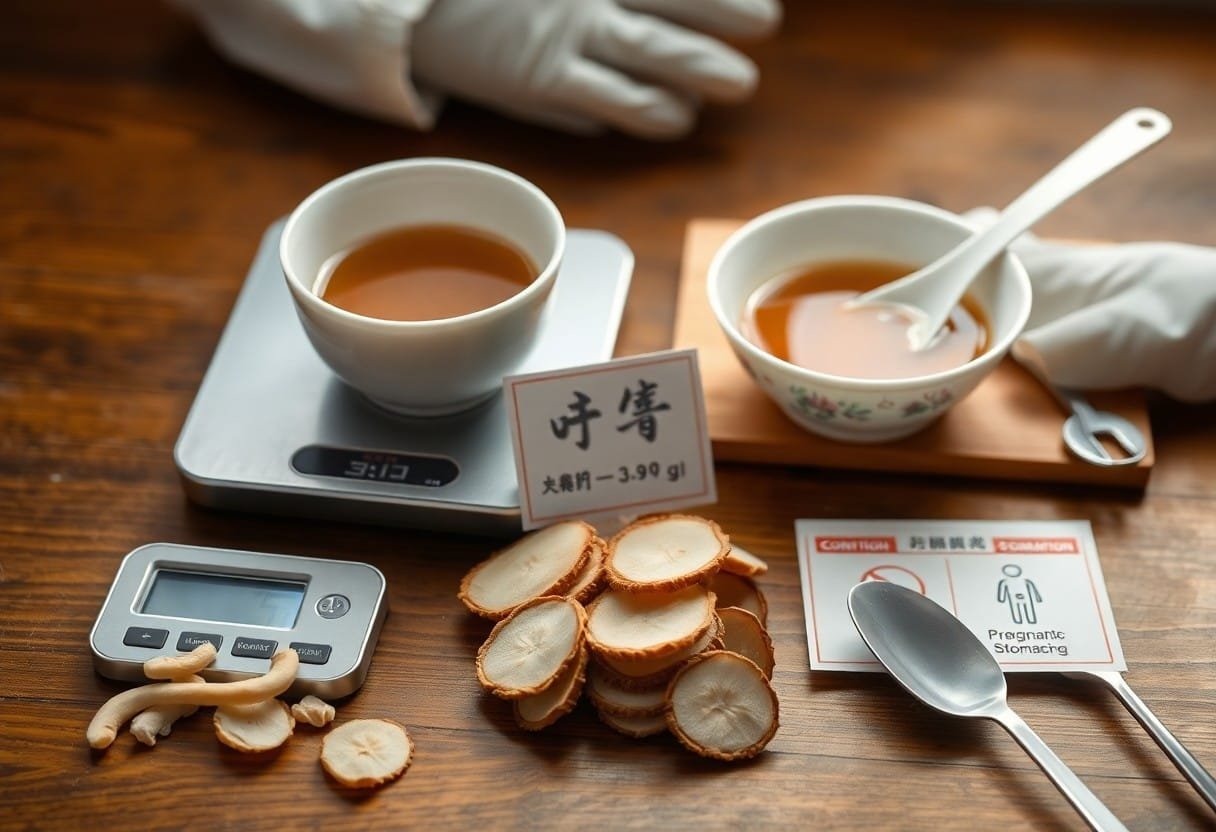
Safety Protocols, Dosage, and Contraindications
Follow processing and prescribing standards: use only properly processed Bai Fu Zi from reputable sources, limit internal courses to short durations, and avoid raw rhizome preparations that increase toxicity risk. You must document concurrent medications and preexisting cardiac or neurological conditions before use.
Dose recommendations for processed rhizome typically range 3-6 g daily in decoction; you should start at the lower end for elderly or frail patients. Contraindications include pregnancy, breastfeeding, severe cardiovascular disease, and known hypersensitivity-consult a qualified practitioner before combining with antiepileptics or cardiac drugs.
Identifying signs of diterpene alkaloid toxicity
Monitor for oral or facial burning and numbness, gastrointestinal upset, dizziness, irregular heartbeat, hypotension, muscle weakness, seizures, or respiratory depression; if you observe these symptoms, discontinue use and seek urgent medical evaluation.
Guidelines for internal administration and topical use
Prepare internal doses as decoctions using processed slices, discarding foam and limiting continuous use to days rather than weeks; you should avoid ingesting raw powders or homemade unprocessed formulations that concentrate diterpene alkaloids.
Apply external preparations cautiously: perform a small patch test, avoid mucosal and broken-skin contact, and remove topical pastes immediately if you experience intense burning, edema, or systemic signs-then seek care.
Consult a licensed herbalist or physician before treatment, obtain baseline ECG and electrolyte testing if you have cardiac risk factors, and arrange timely follow-up so you can stop therapy at the first sign of toxicity or adverse interaction.
Conclusion
Conclusively Bai Fu Zi (Typhonium rhizome) offers you a traditional wind-dispelling approach for facial paralysis and seizure patterns by resolving damp-phlegm and unblocking meridians; proper processing reduces its irritant properties. If you consider using it, consult a qualified practitioner to confirm indication, dosing, and safe preparation, and to monitor for adverse effects and herb-drug interactions.