
With Bai Mao Gen (Imperata Rhizome), you access a cooling, hemostatic herb that clears blood-heat, arrests bleeding, and soothes urinary irritation; consider it for hematuria, dysuria, and heat-related hemorrhages under qualified practitioner supervision.
Key Takeaways:
- Clears heat and cools the blood, stops bleeding, and promotes urination; indicated for blood-heat bleeding syndromes such as hematuria, hematemesis, epistaxis, metrorrhagia, and hot painful urinary dribbling.
- Typical clinical dose 6-15 g as a decoction, with powdered doses up to ~30 g; herb is usually used raw to maintain its strong cooling and hemostatic effects and often paired with other blood-cooling or urinary-clearing herbs.
- Contraindicated in bleeding due to cold from deficiency or yang deficiency; use caution in pregnancy and when combining with pharmaceutical diuretics or in patients at risk for fluid/electrolyte imbalance.
Botanical Profile and TCM Energetics
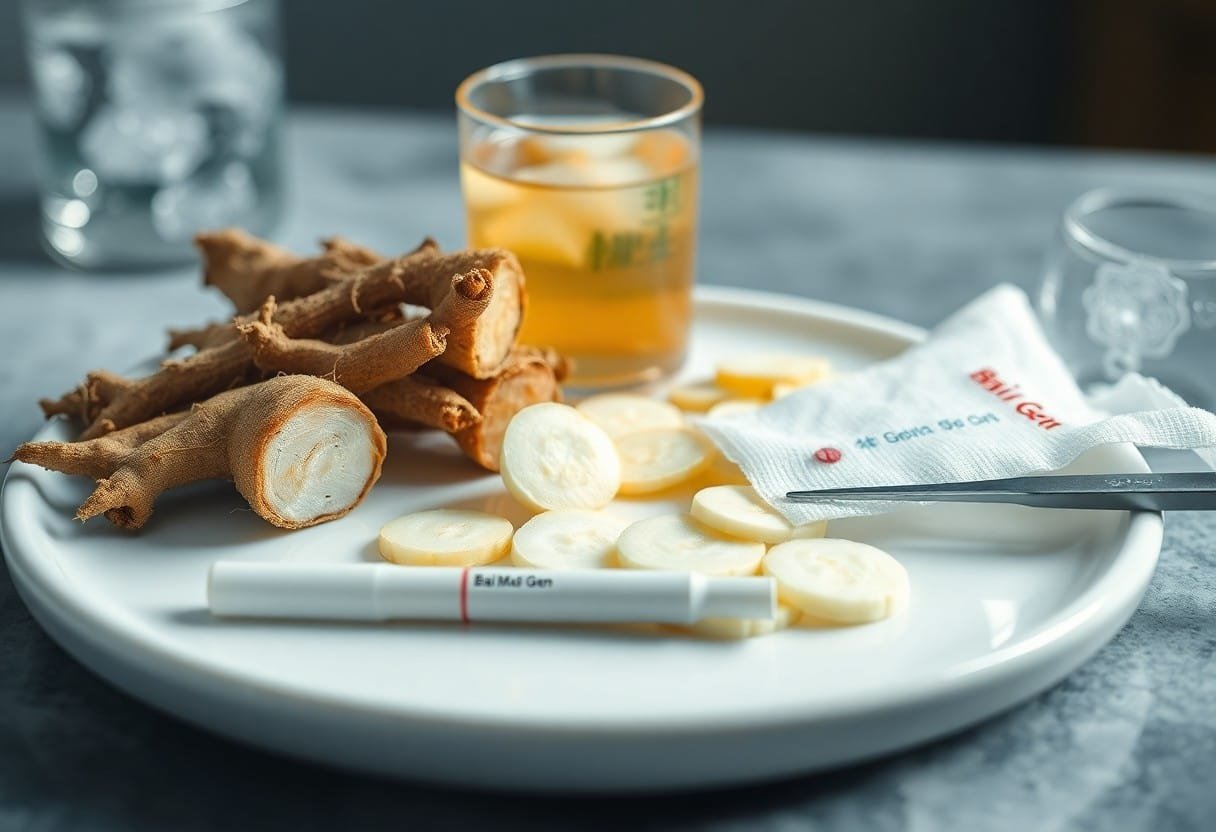
Botanically, Bai Mao Gen is the creeping rhizome of Imperata cylindrica, a perennial grass with white, fibrous underground stems and slender leaves. You will notice its extensive rhizome network in damp meadows and roadside soils across subtropical and tropical regions, where the harvested rhizome is dried for medicinal use.
You will find Bai Mao Gen described in TCM as cooling and blood-clearing; it arrests bleeding and promotes urination. Its energetic profile makes it suitable when blood heat produces hematuria or urinary irritation, and you may pair it with herbs that support drainage and hemostasis.
Species Identification: Imperata cylindrica
Taxonomically, Imperata cylindrica is a distinct species in the Poaceae family, known commonly as cogon grass. You can identify it by cylindrical stems, a white to yellowish rhizome, and a fluffy seedhead that aids in wind dispersal.
Mature plants display tufted growth with narrow leaves and a conspicuous ligule; you should inspect the rhizome color and texture to confirm authenticity, since other grasses may be mistaken for Bai Mao Gen if only aerial parts are examined.
Traditional Properties: Sweet, Cold, and Lung/Stomach Tropism
Energetically, Bai Mao Gen is characterized as sweet and cold, entering the Lung and Stomach channels; you use it to clear heat from the blood, stop bleeding, and relieve urinary dysfunction tied to heat. The sweet flavor moderates harsh coldness while the cold property targets heat signs.
Clinically, you will encounter Bai Mao Gen for bloody urine, coughing blood from lung heat, or bleeding gums; dosing and combinations should align with pattern diagnosis so you address both the bleeding and the underlying heat driving it.
Hemostatic Actions: Cooling the Blood to Stop Bleeding
Bai Mao Gen cools excess blood heat and constricts fragile capillaries, so you observe quicker cessation of bleeding in conditions such as hematemesis and epistaxis.
Clinical practice pairs it with astringent and qi-stabilizing herbs to reinforce hemostasis while you monitor for fluid loss and signs of damp-cold.
Mechanisms for Treating Epistaxis and Hematemesis
Cooling the blood reduces thermal injury to the vascular lining, decreasing permeability so you see fewer mucosal bleeds and reduced severity in epistaxis or hematemesis.
Pharmacologically, its tannins and flavonoids exert astringent and anti-inflammatory effects that help you form more stable clots on affected mucosa.
Addressing Pathogenic Heat in the Blood Level
Pathogenic heat at the blood level drives restlessness and profuse bleeding; you can apply Bai Mao Gen within cooling formulas to clear blood-heat and temper hemorrhagic tendencies.
Dosage and pairing matter: you typically use moderate amounts alongside heat-clearing, damp-draining herbs, and you avoid it in yang-deficient cold patterns to prevent aggravating cold signs.
Diuretic Properties and Urinary Tract Support
Bai Mao Gen promotes urinary elimination by clearing heat and supporting diuresis, so you can address hematuria and burning sensations associated with blood-heat. Its cool nature helps stabilize bleeding while facilitating fluid movement through the lower jiao.
Clearing Damp-Heat to Relieve Dysuria
When you face painful, scanty urination from damp-heat, Bai Mao Gen disperses heat in the lower jiao and soothes irritation, often easing dysuria, cloudy urine, and urgency without overly drying tissues.
Promoting Diuresis to Resolve Edema and Ascites
You may notice increased urine output and reduced peripheral swelling when Bai Mao Gen is paired with other diuretics; it supports gentle fluid resolution while cooling concurrent heat signs.
In practice, you combine Bai Mao Gen with draining herbs for edema or with cooling, blood-stanching herbs for ascites linked to heat and bleeding, tailoring the formula to strength and underlying patterns.
Therapeutic Applications for Lung and Stomach Heat
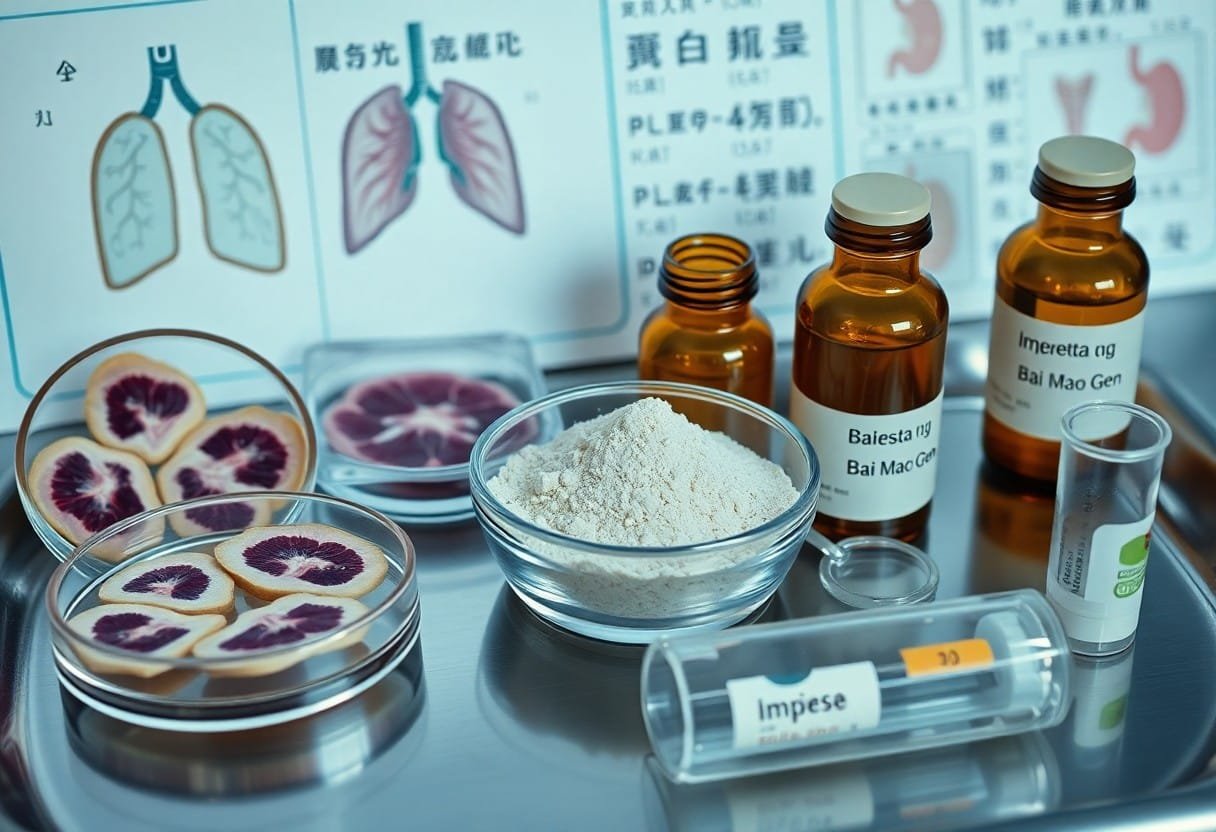
Bai Mao Gen cools Lung and Stomach heat, helping you stop bleeding, reduce throat and oral inflammation, and relieve feverish thirst while supporting urine flow when heat disturbs fluids.
You can source reliable preparations like Bai Mao Gen (Imperata Rhizome) 4oz and combine it with cooling or moistening herbs according to the pattern and your digestive tolerance.
Alleviating Heat-Induced Cough and Wheezing
Heat in the Lungs that produces dry, irritating cough and wheeze responds when you add Bai Mao Gen to clear heat, reduce blood-streaked sputum, and soothe airway irritation alongside moistening herbs.
Generating Fluids to Quench Febrile Thirst
Thirst from febrile disorders diminishes as Bai Mao Gen generates fluids and moistens the mouth and throat, so you should pair it with yin-nourishing herbs to rebuild fluids without promoting dampness.
Combine Bai Mao Gen with herbs like mai men dong or huo ma ren when you need to restore fluids; you must adjust dosages if digestion is weak to avoid burdening the Spleen while resolving heat.
Modern Pharmacological Research
Research has demonstrated anti-inflammatory, diuretic, hemostatic and mild antimicrobial actions for Imperata rhizome in preclinical models, and you can review standardized product data such as Bai Mao Gen (Lab Tested) to compare extraction profiles and laboratory assays.
Active Chemical Constituents: Triterpenoids and Phenols
Triterpenoids and phenolic compounds isolated from Imperata show antioxidant and anti-inflammatory activity in vitro, and you will find these constituents implicated in diuretic and hemostatic effects in animal studies.
Anti-inflammatory and Renal Protective Effects
Laboratory investigations report reductions in pro-inflammatory cytokines and improved markers of renal tubular integrity after exposure to Imperata extracts, so you can view these outcomes as a pharmacological rationale for treating blood-heat and urinary complaints.
Mechanisms likely include suppression of inflammatory signaling, scavenging of reactive oxygen species, improved renal microcirculation and reduced tubular apoptosis; you should balance these promising preclinical results with the current paucity of rigorous clinical trials before applying them in practice.
Clinical Administration and Safety
Clinical administration favors Bai Mao Gen for blood-heat bleeding and urinary irritation; you should monitor hydration and electrolytes when using concentrated forms like Bai Mao Gen (Imperata Rhizome, 白茅根) extract granules, and stop or adjust treatment if excessive diuresis or digestive discomfort occurs.
Dosage Standards and Preparation Methods
Dosage standards vary by form: 6-15 g for decoction or the manufacturer’s equivalent in granules; you should dissolve extract granules in warm water and take after meals to minimize stomach upset.
Contraindications for Spleen and Stomach Deficiency
Avoid Bai Mao Gen if you present spleen-stomach deficiency signs such as loose stools, fatigue, or poor appetite, since its cooling and diuretic effects can worsen weakness and dampness.
Consult a qualified TCM practitioner before combining Bai Mao Gen with cold or tonifying formulas; you may require reduced dosing or concurrent spleen-warming herbs to protect digestion and strength.
Conclusion
You should view Bai Mao Gen (Imperata rhizome) as a cooling hemostatic for blood-heat bleeding and urinary irritation; its cold, bitter nature clears heat, stops bleeding, and supports diuresis. You must consult a qualified practitioner to align dosage with your constitution and avoid provoking yang deficiency or excessive internal cold.