
There’s a traditional warming herb, Ai Ye (mugwort leaf), that you can use to relieve menstrual pain and regulate irregular bleeding; you should avoid it during pregnancy and if you have bleeding disorders or take anticoagulants due to allergic and uterotonic risks.
Key Takeaways:
- Ai Ye (Mugwort Leaf) is a warming herb in Traditional Chinese Medicine that warms the uterus and disperses cold to relieve dysmenorrhea and cold-related amenorrhea.
- The herb astringes and stabilizes blood, commonly used to stop uterine bleeding, reduce menorrhagia, and regulate irregular menses.
- Allergic reactions in pollen-sensitive individuals and potential interactions with anticoagulant medications have been reported; use under a qualified practitioner’s guidance and exercise caution during pregnancy.
Botanical Profile and TCM Energetics
Folium Artemisiae Argyi (Ai Ye) is the dried mugwort leaf used in TCM; classified as warm and acrid, it traditionally enters the liver, spleen, and kidney meridians, guiding its use for menstrual and bleeding disorders you manage in practice.
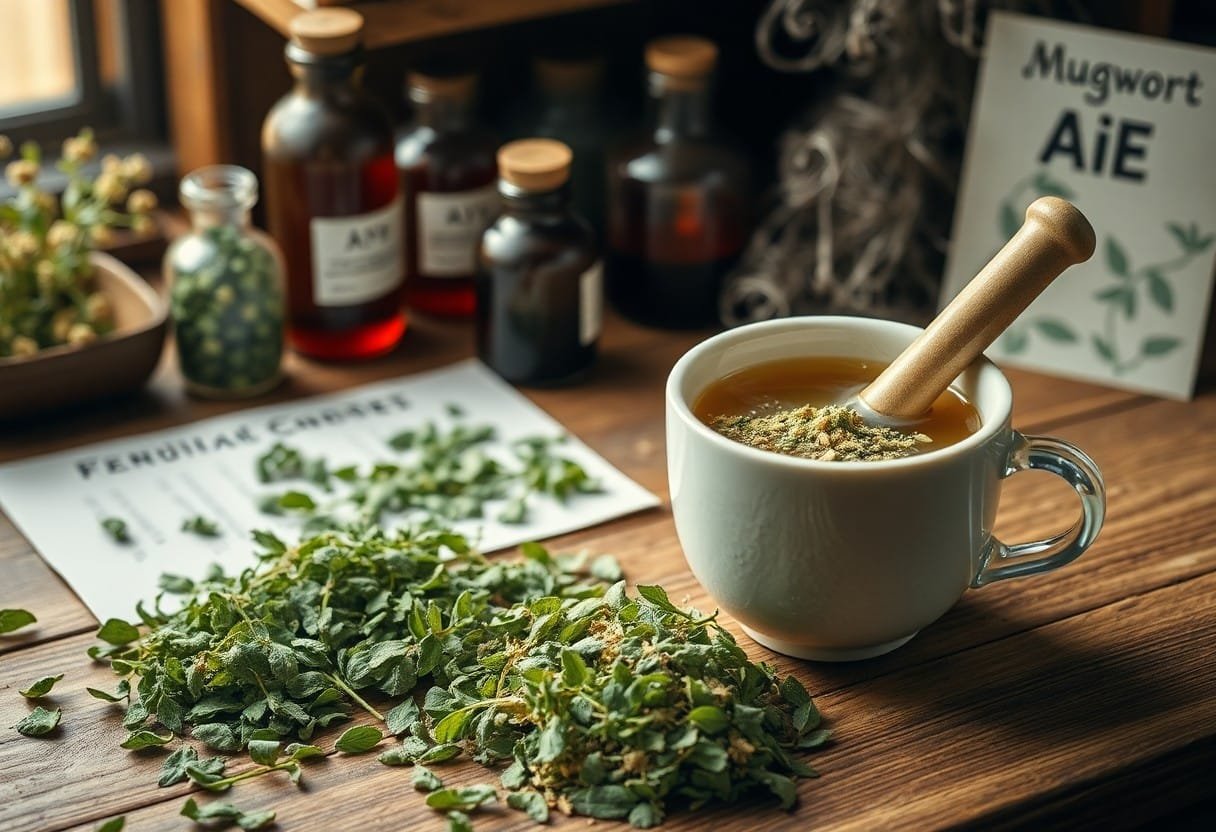
Cultivated across East Asia, its lobed leaves and aromatic, slightly bitter scent aid identification; processing (charred vs raw) alters warming and hemostatic effects, so you should select form according to the patient’s pattern.
Nature, Flavor, and Meridian Tropism
Leaves possess a bitter, acrid flavor with a warm nature in TCM; you will find them directed to the liver, spleen, and kidney, matching indications for cold-related menstrual pain, blood stagnation, and prolonged bleeding.
The Warming Properties of Folium Artemisiae Argyi
Artemisia exerts a warming, yang-promoting action that disperses cold and warms the menses, helping to stop bleeding due to cold or deficiency patterns when you combine it with blood-regulating formulas or moxibustion.
Clinical application favors charred Ai Ye for hemostasis and raw or wine-fried forms for regulating menses; because the herb can stimulate uterine contractions and is contraindicated in pregnancy, you must counsel patients on appropriate dosing and avoidance during gestation.
Primary Therapeutic Actions
Ai Ye concentrates on warming the uterus and stopping bleeding that arises from cold in the channels, so you rely on it to disperse cold and consolidate the blood in menstrual disorders with cold signs. It both staunches bleeding and relieves cold-related pain.
Clinically, you find it moves qi and harmonizes blood to reduce cramping and irregular flow, used where cold and stasis coexist; use caution with unexplained heavy bleeding and seek practitioner diagnosis.
Warming the Channels and Dispersing Cold
You will notice Ai Ye’s warming action penetrates the meridians, dispersing cold that tightens the uterus and reducing clotted, dark bleeding and cold-induced dysmenorrhea. Warming is central for cold-pattern bleeding.
Channels that are cold open when you combine Ai Ye with other warming herbs, allowing qi to move and blood to stabilize; avoid use with heat signs or high fever.
Regulating Qi and Blood to Stop Pain
Regulating qi and blood, Ai Ye helps relieve cramping by unblocking stagnation and firming the uterus, so you experience less pain and reduced bleeding frequency. Expect notable pain relief in cold-stagnation patterns.
Avoid using Ai Ye in pregnancy without professional oversight and seek immediate care for heavy, unexplained bleeding; you should also watch for allergic reactions or skin sensitivity when applying it topically.
Clinical Applications for Menstrual Health
Ai Ye serves as a warming, blood-moving herb that you can use in formulas to address cold-related menstrual pain and some bleeding irregularities; avoid use in pregnancy and uncontrolled heavy bleeding and consult a practitioner before trying it.
Clinical practitioners often combine Ai Ye with moxibustion and blood-tonifying herbs so you can target cold stagnation, improve uterine circulation, and reduce clotting-related pain; watch for interactions if you take anticoagulants.
Addressing Cold in the Womb and Infertility
Cold patterns in the womb respond to Ai Ye’s warming action, and you may find that you experience more regular cycles and improved pelvic comfort when formulas include this herb; may support implantation in cold-pattern cases.
Combining Ai Ye with warming therapies and individualized herbs allows you to correct yang deficiency and stagnation safely under guidance, so you can pursue fertility support while monitoring for contraindications.
Managing Dysmenorrhea and Irregular Cycles
Pain from primary dysmenorrhea often eases when you use Ai Ye to warm the uterus and move blood, helping reduce cramping and menstrual stagnation; reduces cramping and cycle irregularity in cold-pattern presentations.
You can take Ai Ye in decoctions, pills, or topical moxa blends, but you should stop use and seek care if bleeding worsens or if you are pregnant; do not use during pregnancy or with uncontrolled bleeding.
Research and traditional case reports suggest symptomatic improvement for many women using Ai Ye in pattern-appropriate formulas, so you should work with a qualified practitioner to track progress and adjust treatment if symptoms persist or worsen.
Treatment of Bleeding Disorders
You will find Ai Ye effective for warming the uterus and stanching chronic or cold-pattern bleeding, especially menorrhagia from deficiency-cold. You should use moderate doses and combine with tonics to prevent recurrence, while watching for signs of excess yang or heat that could worsen bleeding.
Mechanisms for Consolidating the Chong and Ren Meridians
Ai Ye warms and astringes to consolidate the Chong and Ren, supporting Kidney yang and tightening uterine vasculature; its aromatic constituents assist in moving blood without dispersing. You will notice reduced uterine spotting when formulas correct underlying cold-deficiency and stabilize the conception vessel.
Applications in Uterine Bleeding and Hematemesis
When used for uterine bleeding or hematemesis, Ai Ye pairs with hemostatic and warming herbs to stop acute loss and address chronic deficiency patterns, with best results in cold-related presentations. You must avoid use in pregnancy and in febrile or excess-heat conditions to prevent harm; pregnancy contraindication is non-negotiable.
Consider topical moxibustion, small decoctions, or inclusion in powdered formulas for recurrent menorrhagia, and combine Ai Ye with appropriate cooling herbs only if heat signs are present; you should also monitor for interactions with anticoagulant therapies and escalate care if bleeding persists.
External Applications and Moxibustion
Ai Ye applied as compresses or sitz baths warms the lower abdomen and can ease cold-pattern menstrual pain when you use it topically for short sessions. Use warming poultices but monitor skin; avoid on broken skin and consult a practitioner if you are pregnant.
You prepare Ai Ye poultices by steeping leaves, cooling to tolerable warmth, and applying thin layers to reduce sensitivity; expect improved circulation yet also a risk of allergic reaction, so test a small area first.
Topical Uses for Damp-Itch Skin Conditions
Poultices made from Ai Ye decoction soothe damp-itch dermatoses when applied to intact skin, and you can expect reduced pruritus and moisture; do not apply to open wounds and perform a patch test to check sensitivity.
The Synergy of Ai Ye in Moxa Therapy
Moxa with Ai Ye concentrates heat and aromatic oils to penetrate the lower abdomen, so you may experience stronger relief of cold-type cramping; you should guard against skin burns and avoid moxibustion during pregnancy.
Combining Ai Ye leaves into moxa or adding powdered leaf to cones enhances aromatic action and warmth; you must supervise heat closely, use a barrier to prevent contact, and stop at the first sign of burning or intense irritation to avoid thermal injury.
Safety Protocols and Contraindications
You should avoid internal use of Ai Ye if you are pregnant or suspect pregnancy, have a history of severe allergic reactions to Asteraceae plants, or are on strong blood-thinning medications; stop use immediately if bleeding worsens or new symptoms appear.
Consult a licensed TCM practitioner or healthcare provider before starting Ai Ye, particularly when you have chronic liver disease, active infections, or are taking anticoagulants, and consider a patch test for topical applications to check for contact dermatitis.
Proper Dosage and Preparation Methods
Use dried Ai Ye in a typical decoction of about 3-9 g per dose, adjusted by practitioner assessment; for teas aim for a gentler infusion at lower doses if you are sensitive.
Combine Ai Ye with warming formulas only under guidance, simmer for 15-30 minutes for a standard decoction, and avoid concentrated extracts if you have heat signs or digestive irritation to reduce risk of overstimulation.
Cautions for Yin Deficiency and Heat Patterns
Avoid Ai Ye if you display clear yin deficiency or existing heat patterns-symptoms like night sweats, afternoon fever, dry mouth, or a red tongue may be aggravated by this warming herb, so do not self-prescribe.
Monitor your symptoms closely when introducing Ai Ye: if you develop increased irritability, insomnia, or mucosal dryness, reduce dose or discontinue and consult your practitioner for cooling alternatives.
If you have yin deficiency with menstrual complaints, ask your clinician about combining Ai Ye with yin-nourishing herbs or choosing milder hemostatic options; cautious, supervised use and dose reduction are common strategies to avoid worsening heat signs.
To wrap up
Taking this into account, you should consider Ai Ye (Artemisiae argyi Folium) as a warming herb that supports menstrual circulation and may alleviate cramping and abnormal bleeding when applied appropriately. Consult a qualified herbalist or healthcare provider about dosing, contraindications, and potential interactions before incorporating it into your routine.