

With Ba Qia (Luffa Seed) you have a cooling herb that clears heat and reduces phlegm accumulation to ease respiratory congestion. You must avoid it in cold or yang-deficient states; use may worsen cold conditions or provoke allergic reactions.
Key Takeaways:
- Ba Qia (luffa seed) clears heat and transforms phlegm, especially effective for lung-heat patterns with thick yellow sputum, chest congestion, and productive cough.
- Therapeutic profile: cooling and phlegm-resolving actions that aid expectoration and reduce mucosal inflammation; typically combined with yin-nourishing or additional heat-clearing herbs to avoid excess dryness.
- Precautions: avoid use in spleen-stomach deficiency or cold-phlegm with loose stools, watch for allergic reactions, and adjust or omit during pregnancy-use under a qualified TCM practitioner’s guidance.
Botanical Profile and Traditional Preparation
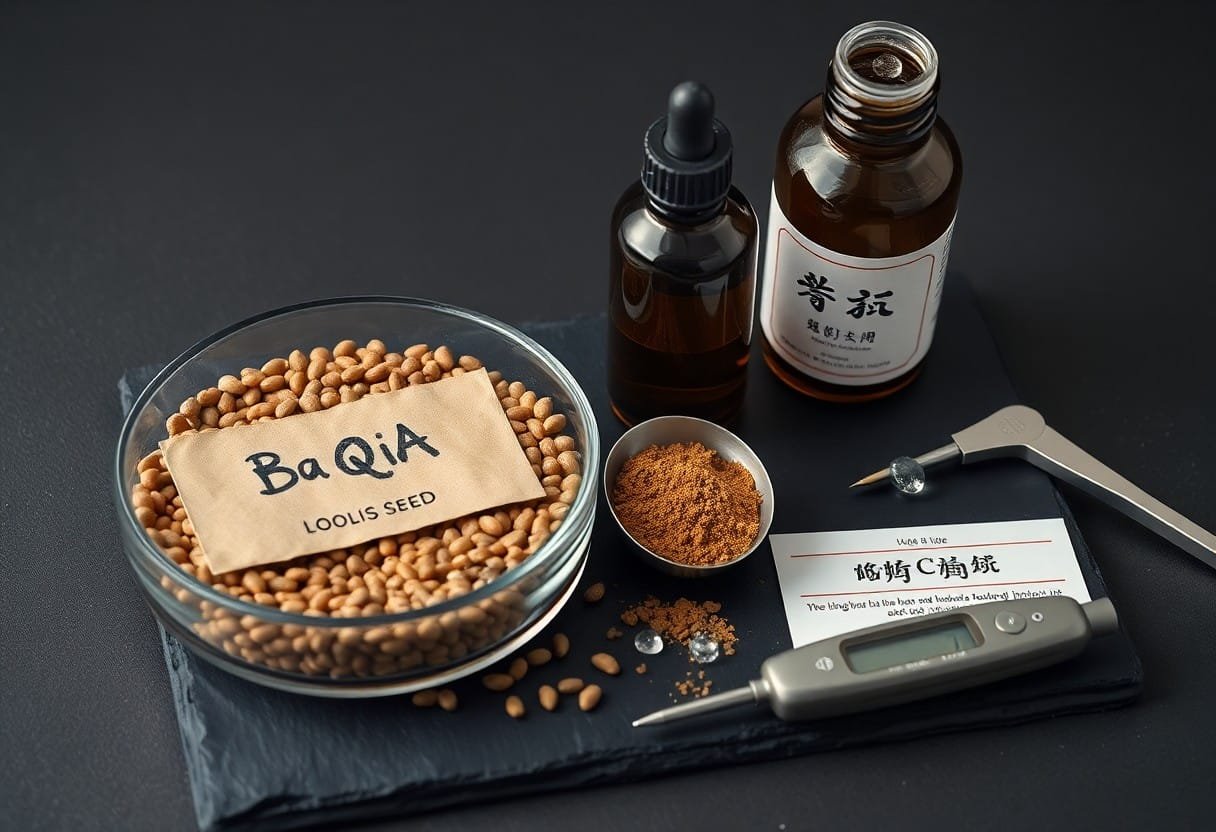
Luffa seed (Ba Qia) forms inside mature gourds and appears as small, flattened brown seeds with a hard coat; you can identify them by their slightly bitter scent and firm texture. The seed’s cooling nature is linked to its lipid and saponin content, which practitioners use to address heat and phlegm accumulation.
Traditional processing often involves drying, aging, or light heating to temper harshness; you will find seeds used whole, powdered, or in decoctions. These methods aim to reduce irritant compounds while preserving expectorant and cooling effects.
Identification and Harvesting of Luffa Seed
Seed appearance should be uniform, brown, and intact; you should avoid seeds that are discolored, soft, or show mold. Proper identification includes checking the hull and odor, as damage signals reduced efficacy.
Harvest timing matters: you should collect seeds when vines yellow and fruits are dry, splitting gourds to extract seeds. Late harvesting yields drier seeds that are easier to process, but discard any moldy or insect-damaged seeds to prevent toxicity.
Processing Methods for Medicinal Potency
Drying seeds in shade preserves cooling constituents; you should ensure thorough drying to prevent mold and spoilage, which can render the herb unsafe. Controlled drying maintains medicinal integrity for later use.
Roasting or light pan-heating modifies bitter saponins and can make seeds safer for internal use; you should avoid excessive heat that chars the seed, as charring destroys active components and reduces therapeutic benefit.
Extraction choices impact potency: you should use water decoction for expectorant, cooling preparations, while alcohol extraction concentrates lipophilic actives for topical or concentrated formulas; always dose cautiously, and avoid use in pregnancy or active diarrhea without professional guidance.
TCM Energetics and Pharmacological Properties
Ba Qia functions as a cooling, phlegm-resolving herb in practice; you apply it when heat has transformed fluids into thick, turbid sputum and to support lung and stomach clearing. Traditional notes record mild moistening and facilitation of expectoration without strong drying effects.
Modern analyses identify saponins, flavonoids and polysaccharides that align with expectorant and anti‑inflammatory activity, and you should use caution because excess dosing may cause gastrointestinal irritation or allergic responses in sensitive people.
Temperature, Flavor, and Meridian Tropism
Temperature is described as cooling, with a flavor leaning sweet‑bitter; you will choose Ba Qia when heat signs and thick phlegm predominate, especially with lung and stomach involvement.
Key Energetic Properties
| Property | Detail |
|---|---|
| Temperature | Cooling |
| Flavor | Sweet, Bitter |
| Meridian Tropism | Lung & Stomach |
Active Compounds and Biochemical Actions
Compounds such as saponins, flavonoids, polysaccharides and fatty acids contribute to mucolytic, expectorant and anti‑inflammatory effects; you can expect modulation of mucus viscosity and suppression of some inflammatory mediators in preclinical assays.
Experimental work reports seed extracts reducing mucin viscosity and inhibiting pro‑inflammatory cytokine release in vitro, so you should note that clinical data remain limited and preparation/dose materially affect outcomes.
Mechanisms for Clearing Heat and Resolving Phlegm
Ba Qia acts as a cooling, slightly bitter seed that directs heat outward while mobilizing turbid phlegm; you will notice reduced thick, yellow sputum and eased chest fullness when formulas include it. Combine with expectorants and mild Yin-nourishing herbs to balance dryness and avoid overcooling.
Heat-clearing effects arise from bitter-cold properties that transform congealed mucus and reduce inflammatory swelling; you can use Ba Qia for acute phlegm-heat presentations where expectoration is difficult. Exercise care if you have signs of Spleen Yang deficiency.
Addressing Phlegm-Heat Stagnation in the Lungs
When phlegm-heat stagnates in the lungs, you should apply Ba Qia to soften and disperse sticky sputum, facilitating expectoration and relieving wheeze; pairing with herbs that open the chest enhances expectorant action. Watch for emerging dryness and add Yin-support if cough becomes nonproductive.
Promoting Diuresis to Expel Damp-Heat
Promoting diuresis with Ba Qia supports flushing of damp-heat from the lower burner, so you may see diminished urinary turbidity and less genital dampness when it’s combined with gentle diuretics. Be aware of excessive fluid loss or dehydration during prolonged use.
Use moderate dosing to prevent overdraining and avoid pairing with strong cathartics in those with weak Yang; you should adjust formulas by adding Spleen-supportive herbs when frequent urination or loose stools appear. Contraindicated in pregnancy without professional supervision.
Clinical Applications in Respiratory Health
You will find Ba Qia effective when addressing phlegm-heat patterns that present with productive cough, chest fullness, and feverish sensations; it helps loosen sticky sputum and reduce heat signs so you can expect easier expectoration.
When you integrate Ba Qia into treatment plans, combine it with expectorant and lung-supporting herbs and monitor response closely; discontinue if rash, severe gastrointestinal upset, or worsening breathing occurs.
Management of Productive Cough and Bronchitis
Treating productive cough, you can use Ba Qia to promote mucus clearance in bronchitis characterized by thick yellow sputum and heat signs; pairing with moistening herbs improves tolerance.
Consider short courses and dose adjustments for the elderly or those with weak digestion, and seek care if you develop high fever, bloody sputum, or marked shortness of breath; these are red flags requiring urgent evaluation.
Therapeutic Use in Asthma and Wheezing
For asthma with prominent phlegm-heat features, you may employ Ba Qia to reduce wheeze by clearing heat and loosening obstructive sputum, while continuing standard bronchodilator therapy; do not substitute herbs for emergency treatment.
Dosage should be individualized and limited to short courses to avoid over-drying the lungs; stop use if wheeze worsens, you develop chest tightness, or signs of allergy appear.
Monitor peak flow and symptom trends while using Ba Qia and coordinate adjustments with your clinician, since combined herbal and conventional regimens often provide better control but require supervision to avoid interactions and inadequate response during exacerbations.
Synergistic Herb Pairings and Formulations
Pairings with bitter, heat-clearing herbs like Huang Qin or Huang Lian and phlegm-transforming herbs such as Ban Xia and Gua Lou enable you to target phlegm-heat and internal heat, while preserving Ba Qia’s cooling action; avoid use with marked cold patterns or weak digestion which can be aggravated by excessive cooling.
When combining dosages you should favor moderate amounts of Ba Qia alongside aromatic phlegm-resolving herbs to prevent overcooling; monitor for loose stools or abdominal cold and adjust under practitioner guidance.
Combining Ba Qia for Enhanced Phlegm Resolution
Combining Ba Qia with warming, phlegm-transforming herbs like Ban Xia helps break down greasy, stubborn phlegm so you can expect clearer sputum and reduced chest oppression; use caution if you have a cold constitution.
Add expectorants such as Gua Lou or Jie Geng to move qi and guide Ba Qia’s cooling effect outward; you should avoid heavy, greasy foods while taking this pairing to support digestion and effectiveness.
Traditional Formulas for Internal Heat Clearing
Traditional formulas pair Ba Qia in blends aimed at clearing internal heat with herbs like Huang Qin and Jin Yin Hua so you can reduce feverish sensations and thick phlegm; these formulas are not suited to yang deficiency.
In clinical practice practitioners often modify formulas based on tongue and pulse, adding tonics if your digestion is weak to prevent overcooling; seek professional diagnosis before long-term use.
Try to balance Ba Qia’s cooling nature with aromatic or bitter counterparts so you can achieve phlegm resolution without injuring Spleen yang, because improper combinations can lead to increased cold symptoms or digestive upset.
Safety Protocols and Contraindications
If you are pregnant, breastfeeding, have serious liver or kidney disease, or are immunocompromised, consult a licensed practitioner and your physician before using Ba Qia; avoid unsupervised use in pregnancy and seek professional guidance for chronic conditions.
You must stop and seek medical attention if you develop rash, facial swelling, or breathing difficulty; inform your practitioner about all medications, as herbs can interact with prescription drugs and require monitoring.
Recommended Dosage and Administration
Typical doses you will find in TCM formulas are 3-9 g daily as a decoction; follow product labels for granules or powders and adjust only under practitioner supervision to match your pattern.
When you prepare Ba Qia, decoct according to classical methods or practitioner instruction, take with warm liquids after meals, and avoid taking large single doses to reduce digestive upset.
Cautions for Spleen and Stomach Deficiency
Avoid Ba Qia if your digestion is weak with signs like loose stools, poor appetite, cold limbs, or fatigue, since it can aggravate a cold spleen pattern; use warming, tonifying herbs only under guidance and stop if digestion worsens.
For mild spleen deficiency, you might use Ba Qia only at reduced doses and paired with digestive-supporting herbs; monitor your stools and appetite closely and consult your practitioner if symptoms persist or worsen.
Final Words
Considering all points, Ba Qia (luffa seed) clears heat and transforms phlegm, so you can employ it in formulas to relieve cough with thick sputum and chest congestion. Use the herb under professional guidance and verify interactions and dosing via reliable sources such as Chinese Herbs before clinical use.