
There’s a traditional Chinese herb, Bai Lian (White Ampelopsis), that cools heat-toxins and reduces abscesses and toxic swellings; you can apply it topically or use decoctions under practitioner guidance to clear heat, drain pus, and alleviate pain.
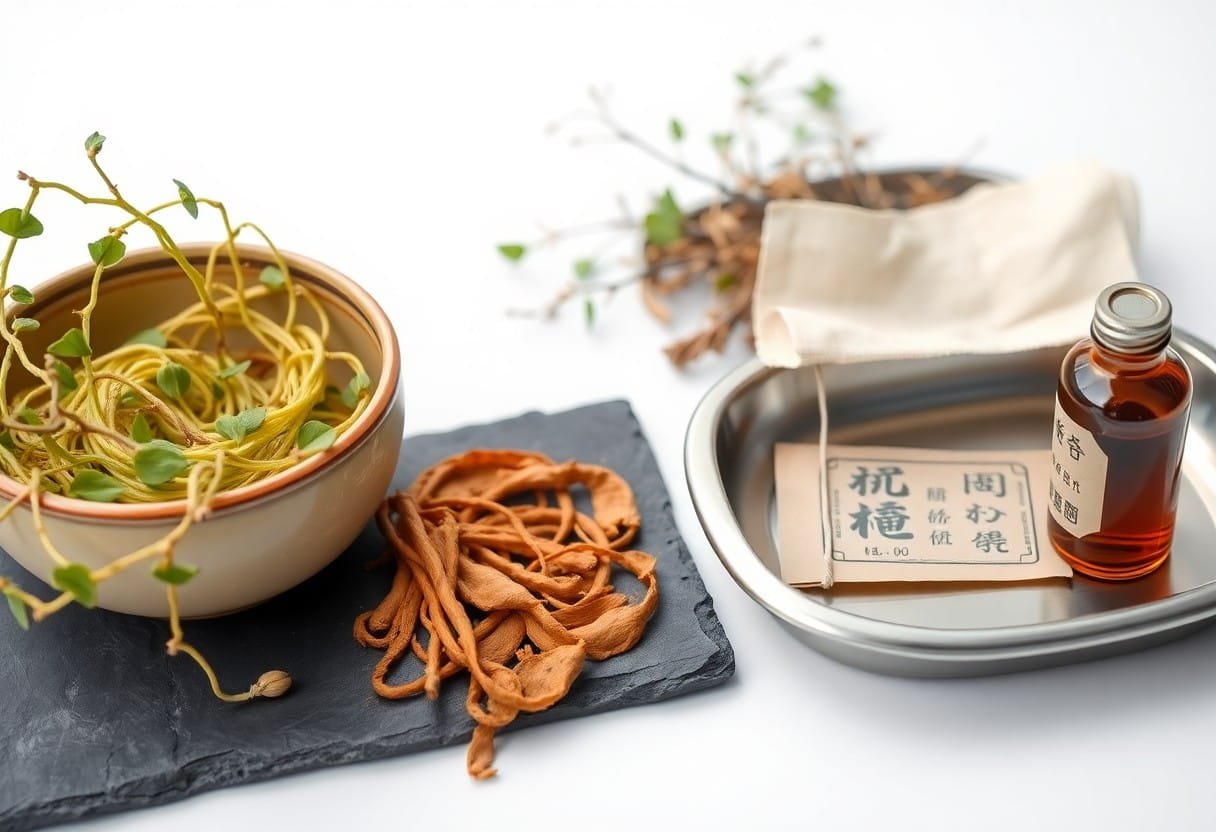
Key Takeaways:
- Bai Lian (White Ampelopsis) is a cold, heat‑clearing herb that resolves toxicity and helps drain fire to reduce abscesses and toxic swellings.
- Used for boils, carbuncles, mastitis, infected sores and traumatic swellings; applied both internally (decoctions) and externally (poultices) depending on the condition.
- Avoid use in patients with cold Spleen/Stomach conditions or Yin deficiency without heat; consult a qualified TCM practitioner and watch for gastrointestinal upset or allergic reactions.
Botanical Profile and Identification
Ampelopsis japonica is a deciduous climbing vine with a compact root tuber used in traditional preparations; you will notice small panicles of pale flowers and clusters of white to bluish berries that help with field recognition.
Leaves range from entire to three-lobed with serrated margins and a thin petiole, so you should compare leaf shape and berry color when distinguishing this species from similar vines.
Characteristics of Ampelopsis japonica
Stems are slender and twining, equipped with tendrils that help you follow the vine through scrub and woodland edges; older stems develop a woody texture that contrasts with herbaceous neighbors.
You can confirm identity by noting the seasonal sequence: flowers in summer, pale berries by autumn, and a fleshy root tuber hidden below ground.
Harvesting and Preparation of the Root Tuber
When you harvest the root tuber, wait until aerial growth dies back in late autumn so reserves are highest; dig carefully to avoid bruising the storage tissue.
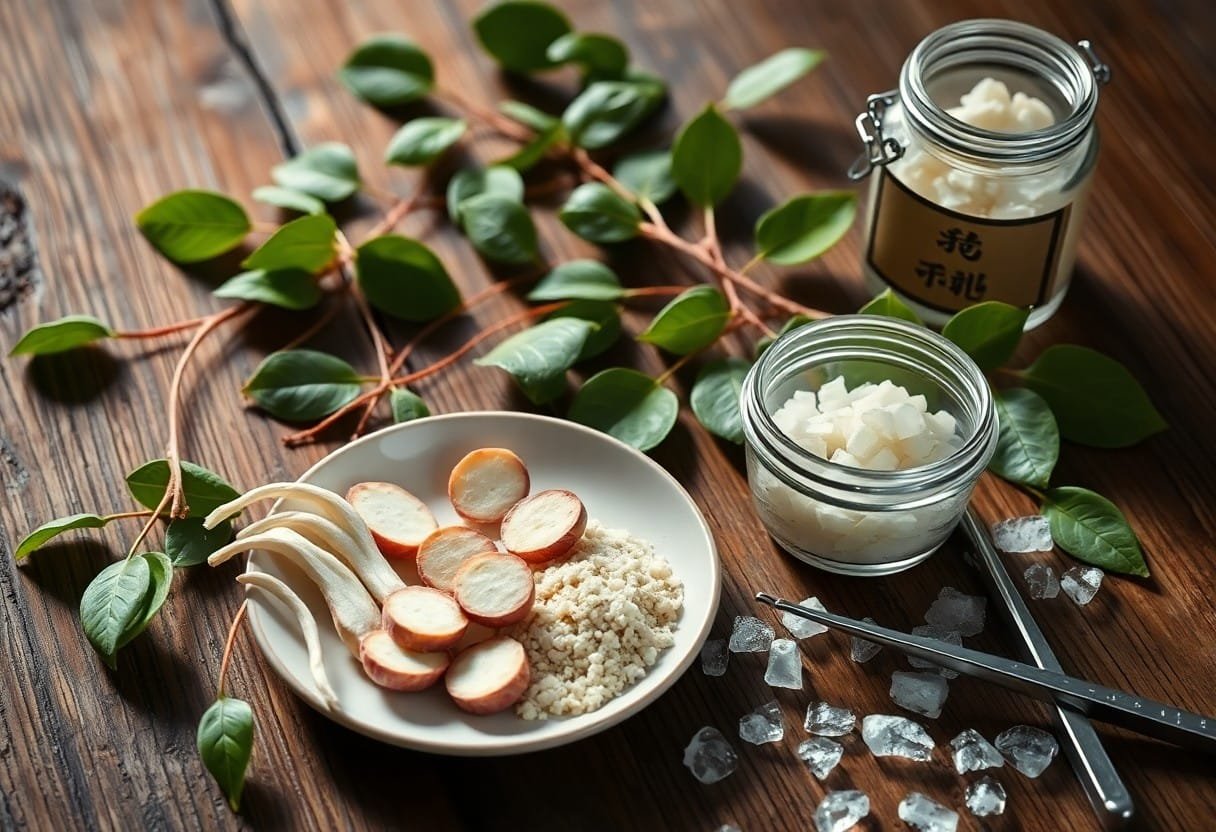
Harvest mature, firm tubers, rinse to remove soil, then slice thinly and dry in sun or a low‑temperature dehydrator until fully crisp to prevent spoilage.
After drying, you may powder or decoct the slices as required, and store the prepared material in airtight containers in a cool, dry place for later use.
Traditional Chinese Medicine Energetics
You encounter Bai Lian in formulas aimed at draining heat and resolving toxicity, and detailed notes appear at Bai Lian – Chinese Herbs, which you can consult for classical references.
Bai Lian acts to disperse heat and discharge pus, so you should weigh its cooling direction when combining it with herbs that move blood or relieve constraint to treat abscesses and toxic swellings.
Nature, Flavor, and Meridian Tropism
Herb presents a cold nature with bitter and slight sweet flavors, and you will note tropism toward the Lung and Large Intestine channels that aligns it with external abscesses and skin eruptions.
The Role of Cooling Properties in Clearing Heat
Cooling action reduces inflammatory signs like redness, heat, and pain, so you use Bai Lian to cool local toxicity while supporting pus resolution in early to mid stages of abscess formation.
Clinical observation indicates you should combine Bai Lian carefully with supportive herbs to prevent stagnation and to enhance drainage, adjusting dose based on the severity and stage of the lesion.
Primary Therapeutic Actions
Bai lian acts as a cooling, anti-inflammatory herb that you can apply in formulas to clear localized heat and toxins from abscesses and inflamed swellings.
You will find its bitter, cold nature directs pathogenic heat outward and downward, helping reduce pain, redness, and the intensity of acute inflammatory responses.
Resolving Toxicity and Reducing Swelling
Cooling effects of Bai lian help neutralize toxic heat at the lesion, allowing you to reduce erythema and edema in early-stage skin infections and boils.
Clinicians often combine it with herbs that drain pus or support qi, so you can accelerate resolution while minimizing tissue damage and recurrent inflammation.
Dispersing Nodules and Promoting Healing
Use Bai lian to soften firm nodules and assist you in breaking up early, non-malignant masses, typically alongside blood-moving herbs to restore circulation and healing.
Apply topical preparations or include Bai lian in internal formulas under guidance so you can shorten recovery time, support tissue repair, and watch for sensitivity during treatment.
Bai Lian (White Ampelopsis) – Cooling Herb for Abscesses and Toxic Swellings
Bai Lian’s cooling, dispersing nature lets you reduce heat and swelling in many skin lesions, and practitioners often combine it with complementary herbs or topical care-see standardized preparations like Radix Ampelopsis 白蔹粉 / Bai Lian / Japanese …
When you integrate Bai Lian into treatment plans, you can expect softer nodules, reduced perilesional redness, and better outcomes when incision or topical therapy is required.
Treatment of Abscesses and Carbuncles
Treating abscesses and carbuncles, you use Bai Lian to clear heat and help move stagnant pus, which supports maturation and cleaner drainage alongside appropriate antimicrobial care.
Management of Toxic Sores and Ulcerations
Manage toxic sores and ulcerations by using internal Bai Lian formulations to reduce local inflammation and systemic toxicity while maintaining rigorous wound hygiene.
You should monitor for spreading infection and pair Bai Lian with herbs that promote granulation and resolve lingering dampness, adjusting dosage as the lesion evolves under clinical supervision.
Modern Pharmacological Research
Recent pharmacological work has focused on Bai Lian’s traditional uses, examining its effects on abscesses and inflammatory swellings so you can evaluate evidence-based applications. Studies have progressed from crude extracts to isolated compounds that you can compare across models of infection and inflammation.
Clinical reports and preclinical trials you consult show anti-inflammatory endpoints, antibacterial screens, and safety profiling, offering practical context for therapeutic consideration.
Key Chemical Constituents and Bioactive Compounds
Analysis of Bai Lian extracts reveals flavonoids, stilbenes, saponins, tannins, and polysaccharides that you should consider when assessing biological activity; some compounds parallel those in related Ampelopsis species. Extraction technique and plant part determine which bioactives you detect and their relative potency in assays.
Anti-inflammatory and Antimicrobial Studies
Experimental models report that Bai Lian extracts reduce pro-inflammatory cytokines and inhibit growth of common gram-positive pathogens, so you can see mechanistic parallels with its traditional cooling and detoxifying use. Dose-response findings vary, making direct clinical extrapolation tentative without standardized preparations.
In vitro assays show MIC values against Staphylococcus aureus and reductions in TNF-α and IL-6 release from stimulated macrophages, while animal models demonstrate decreased swelling and abscess size, which you can weigh alongside toxicity data when considering translational potential.
Administration and Safety
For acute abscesses and toxic swellings you should use Bai Lian as a short-term cooling therapy while monitoring for spreading erythema, fever, or systemic symptoms and discontinuing use if signs worsen.
Keep dosage conservative, source the herb from reputable suppliers, and consult a trained herbalist or medical professional before combining Bai Lian with pharmaceuticals or when treating children and the elderly.
Recommended Dosage and Preparation Methods
Prepare a decoction by simmering 3-9 g of dried Bai Lian for 15-30 minutes for internal use, or crush fresh material into a warm paste you apply topically to the affected area and cover with a sterile dressing.
Adjust frequency to tolerance, taking decoctions once or twice daily for short courses and reapplying topical pastes one to two times daily until drainage and inflammation subside.
Contraindications and Herb Interactions
Avoid Bai Lian during pregnancy and lactation, with large unassessed septic wounds, and if you have a known allergy to Ampelopsis species; seek medical care for deep or systemic infections rather than relying solely on herbs.
Discuss use with your prescribing clinician if you take anticoagulants, immunosuppressants, or multiple prescription drugs, since herb-drug interactions are possible and professional oversight reduces risk.
Check for skin sensitivity by performing a patch test before topical application, document all concurrent herbs and medications you use, and stop Bai Lian immediately and get urgent care if you develop fever, spreading cellulitis, or anaphylaxis.
To wrap up
As a reminder, Bai Lian (White Ampelopsis) cools heat, reduces swelling, and helps resolve abscesses and toxic swellings when used correctly; you should consult a qualified herbalist or clinician for dosing and contraindications. You must avoid self-treatment if pregnant, nursing, or on anticoagulants, and seek medical care for deep or systemic infections. Careful preparation and integration into a broader treatment plan enhance safety and effectiveness.